Home / Environment / Denmark's North Sea: From Oil to Carbon Capture
Denmark's North Sea: From Oil to Carbon Capture
30 Jan
Summary
- Old oil fields are being repurposed for massive carbon storage.
- Greensand Future aims to store millions of tonnes of CO2 annually.
- CCS technology is crucial for net-zero goals but faces criticism.
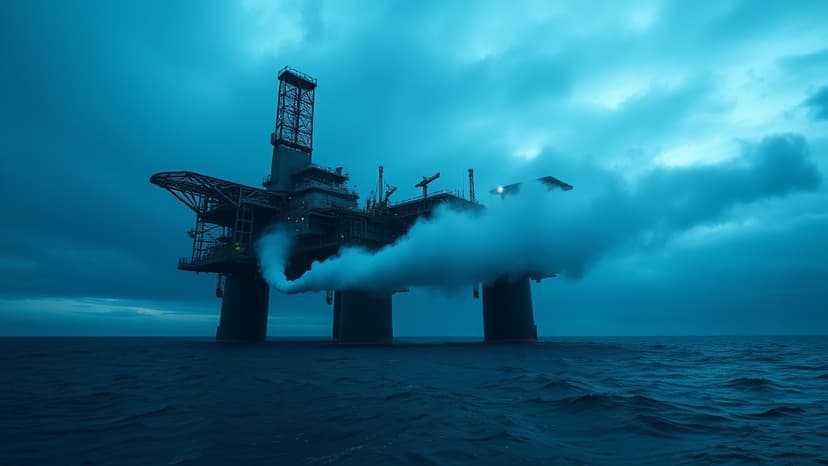
Offshore platforms 250km from Denmark's west coast are being repurposed for a significant carbon storage project. The Greensand Future initiative will inject thousands of tonnes of climate-warming CO2 into a nearly depleted oilfield.
This project, backed by Ineos and other partners, is set to become the EU's first large-scale offshore CO2 storage site. It plans to store approximately 400,000 tonnes of CO2 this year, with ambitions to reach eight million tonnes annually by 2030.
Both the IPCC and IEA highlight carbon capture and storage (CCS) as vital tools for limiting global warming, alongside emissions cuts. The EU also considers CCS necessary for achieving its 2050 net-zero targets.
However, CCS is not without its detractors. Critics worry it might slow down emission reduction efforts and argue that renewable technologies like wind and solar power are more cost-effective. Greenpeace Denmark, for instance, supports CCS for hard-to-abate sectors but questions its use elsewhere.
The North Sea is emerging as a hub for CCS due to its oil and gas legacy, which means potential storage sites are well-explored, and existing offshore infrastructure and expertise can be reused. This geological suitability, with porous rock layers and a cap rock of clay, is ideal for trapping CO2.
For offshore workers, carbon storage presents new career opportunities, shifting skills from oil and gas maintenance to managing CO2 injection systems. This transition signals a positive future for the region amid the green transition.