Home / Environment / Delhi's choked Najafgarh drain gets an ambitious clean-up
Delhi's choked Najafgarh drain gets an ambitious clean-up
4 Mar
Summary
- Over 150 drains empty into the Najafgarh channel.
- Nine million cubic meters of silt have accumulated.
- Mission Sahibi aims to reduce waterlogging and pollution.
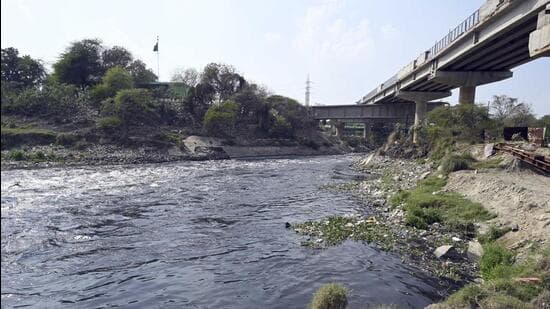
The Najafgarh drain, a critical component of Delhi's flood control, is the subject of an ambitious clean-up initiative named 'Mission Sahibi'. A recent bathymetric survey uncovered that over 150 sub-drains from Delhi and Gurugram discharge into the 57km channel, which has accumulated a staggering 9.1 million cubic meters of silt. This siltation has severely reduced the drain's water-carrying capacity, leading to recurrent waterlogging in areas such as Dwarka and Palam.
Officials from the Irrigation and Flood Control department have initiated desilting operations on priority stretches, employing amphibious excavators and advanced machinery for over 13 hours daily. The project aims to restore the drain's original flow, strengthen its embankments, and mitigate waterlogging risks. The Najafgarh drain is a major contributor, accounting for approximately 70% of wastewater entering the Yamuna in Delhi, making its restoration vital for the river's rejuvenation.
Recent governmental focus includes drone surveys of the Najafgarh and Shahdara drains, alongside a directive to double Delhi's sewage treatment capacity to 1,500 MGD by 2028. Experts highlight the need for accurate sewage generation estimates and emphasize that cleaning the Yamuna requires a coordinated interstate effort involving Haryana and Uttar Pradesh. Publicly releasing survey findings is also recommended to foster community involvement in the restoration process.