Home / Environment / Delhi's Air Crisis: Beyond Winter Smog
Delhi's Air Crisis: Beyond Winter Smog
2 Dec, 2025
Summary
- Delhi's air quality worsens year-round, not just in winter.
- NO2 levels recently hit three times the national safe limit.
- Ozone pollution is a growing summer concern in Delhi-NCR.
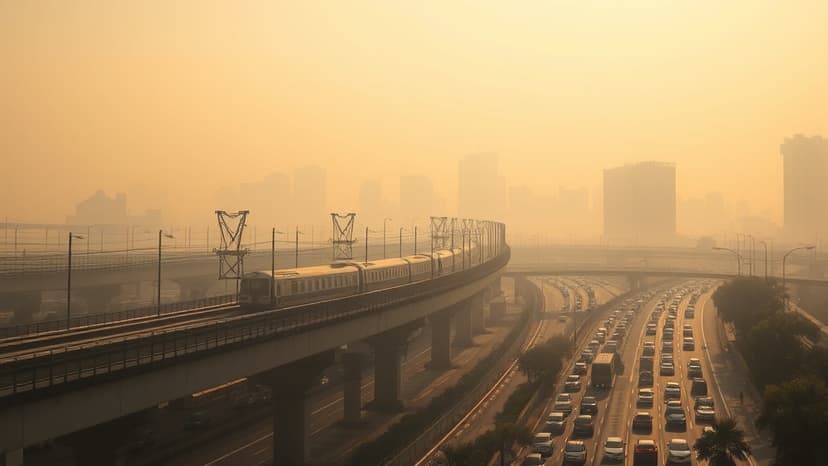
Delhi's air quality crisis is escalating beyond its notorious winter smog, presenting a year-round challenge. From October to February, poor to severe air quality has been a recurring issue, but recent evidence indicates pollution persists throughout the year. Nitrogen dioxide (NO2) levels, a critical transport pollutant, have recently reached three times the national safe limit and nearly ten times the WHO limit in several Delhi areas, raising health alarms.
Ground-level ozone, a secondary pollutant formed from NO2 and volatile organic compounds, is increasingly problematic, especially during warmer months. Data from the Central Pollution Control Board highlights Delhi-NCR as having the highest ozone concentrations in India. This complex pollution mix, intensified by heat, demands structural, long-term solutions rather than reactive interventions like seasonal bans.
Studies indicate that while India's shift to stricter BS VI emission norms significantly reduced NOX and PM from private cars, commercial fleets still exhibit high NOX emissions. Advancing to zero-exhaust emission transport, particularly electric vehicles (EVs), is crucial. Delhi's progressive EV policy has seen some success, but accelerating the transition may require supply-side regulations to ensure cleaner technologies reach the market efficiently.