Home / Environment / Shock Study: Dilapidated Delhi Roads Fuel Air Crisis
Shock Study: Dilapidated Delhi Roads Fuel Air Crisis
19 Mar
Summary
- 66% of an 82.5km Delhi corridor is in poor condition.
- Vehicular dust from roads generates 33.8 tonnes of PM10 daily.
- Studies recommend paving, sweeping, and dust suppressants.
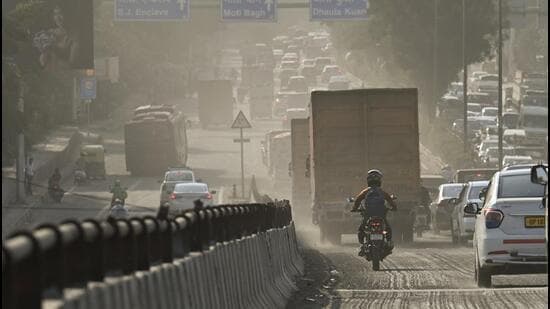
A study conducted from May 2022 to June 2023 identified dust from poorly maintained roads as a major pollution source in Delhi. Specifically, 66% of an 82.5-kilometer corridor from Mayapuri to Punjabi Bagh was found to be in moderate to poor condition. Vehicular traffic on these stretches is estimated to generate 33.8 tonnes of PM10 and 8.16 tonnes of PM2.5 daily.
High concentrations of dust were observed near road edges and medians, exacerbated by unpaved shoulders and waste. The stretch from Ghevra to Punjabi Bagh showed particularly elevated PM10 and PM2.5 levels. The study recommends engineering interventions like paving shoulders, mechanized sweeping, and using dust suppressants.
These ultrafine particles can lead to short-term coughing and breathing difficulties, and long-term respiratory diseases. The Commission for Air Quality Management (CAQM) has formulated a standard framework for roads in the National Capital Region (NCR) based on these findings. Delhi plans to make nearly 1,500 roads dust-free by the end of 2026, with a focus on improving road material quality and maintenance coordination.