feedzop-word-mark-logo
searchLogin
Feedzop
homeFor YouUnited StatesUnited States
You
bookmarksYour BookmarkshashtagYour Topics
Trending
Terms of UsePrivacy PolicyAboutJobsPartner With Us

© 2026 Advergame Technologies Pvt. Ltd. ("ATPL"). Gamezop ® & Quizzop ® are registered trademarks of ATPL.

Gamezop is a plug-and-play gaming platform that any app or website can integrate to bring casual gaming for its users. Gamezop also operates Quizzop, a quizzing platform, that digital products can add as a trivia section.

Over 5,000 products from more than 70 countries have integrated Gamezop and Quizzop. These include Amazon, Samsung Internet, Snap, Tata Play, AccuWeather, Paytm, Gulf News, and Branch.

Games and trivia increase user engagement significantly within all kinds of apps and websites, besides opening a new stream of advertising revenue. Gamezop and Quizzop take 30 minutes to integrate and can be used for free: both by the products integrating them and end users

Increase ad revenue and engagement on your app / website with games, quizzes, astrology, and cricket content. Visit: business.gamezop.com

Property Code: 5571

Home / Environment / Delhi's Pollution: Beyond Visible Smog to Invisible Chemistry

Delhi's Pollution: Beyond Visible Smog to Invisible Chemistry

20 Jan

•

Summary

  • Secondary particulate matter forms in the atmosphere from precursor gases.
  • Ammonium sulphate and nitrate near a third of Delhi's PM2.5.
  • Past successes in Los Angeles, London, Beijing show similar pollution challenges.
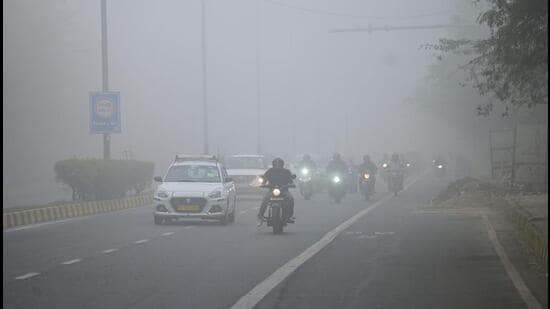
Delhi's Pollution: Beyond Visible Smog to Invisible Chemistry

The battle against severe pollution days in Delhi is entering a more complex phase, moving beyond visible, directly emitted pollutants to those formed invisibly in the atmosphere. Early successes in controlling PM10 and PM2.5 through measures like public transport conversion to CNG and tighter fuel standards have plateaued.

Scientists now understand that a substantial share of PM2.5 is secondary particulate matter, created when gases like sulphur dioxide, nitrogen oxides, and ammonia react. Studies indicate these secondary inorganic aerosols account for close to a third of Delhi's annual PM2.5, a figure that rises significantly during winter smog.

This invisible pollution poses a challenge for public perception and existing action plans, which were designed for primary emitters. Addressing it requires a non-linear approach, targeting precursor gases through broader, earlier, and more intensive policy interventions.

trending

S&P 500 sinks: Trump tariffs

trending

Covid investment scam resurfaces

trending

Winter Storm Enzo snowed south

trending

Dormant Bitcoin whale moves $85M

trending

Detroit schools announce closings

trending

Snowstorm forecast for UK

trending

Tesla restarts Dojo 3

trending

Pittsburgh school closings Tuesday

trending

Russia's Kamchatka buried in snow

Global examples from Los Angeles, London, and Beijing demonstrate that overcoming such plateaus involves coordinating reductions of precursor gases like NOx and VOCs, and often requires regional cooperation and sustained effort.

Delhi NCR faces unique challenges due to its large population and near-landlocked airshed. Effective strategies must include treating secondary particulate matter as a core objective, sequencing precursor controls NCR-wide, and considering particle size in policy.

Future efforts must also address airshed-wide coordination, and ensure equity by linking precursor control with housing improvements and clean energy access. Emergency response systems should evolve to predictive action. The goal is not immediate eradication but consistent reduction of pollution levels and exposure.

Disclaimer: This story has been auto-aggregated and auto-summarised by a computer program. This story has not been edited or created by the Feedzop team.
Secondary particulate matter forms in the atmosphere when precursor gases like sulphur dioxide and ammonia react.
Current plans target directly emitted pollution; they struggle with invisible, atmospherically formed secondary pollutants.
These cities faced similar challenges with secondary pollution, requiring broader coordination and sustained effort on precursor gases.

Read more news on

Environmentside-arrowBeijingside-arrowLondonside-arrowLos Angelesside-arrow

You may also like

Can Delhi Learn from Beijing's Air Quality Turnaround?

18 Dec, 2025 • 197 reads

article image

Beijing Battles Rare Smog Spike After Cleanup Efforts

18 Dec, 2025 • 159 reads

article image

Delhi's Choice: Comfort or Clean Air?

25 Nov, 2025 • 210 reads

article image

South Asia Chokes: Transnational Air Crisis Deepens

21 Nov, 2025 • 268 reads

article image

Baby Boy Rescued from Kidnapper in Delhi Suburb

19 Nov, 2025 • 274 reads

article image