Home / Environment / Delhi's Pollution: Beyond Visible Smog to Invisible Chemistry
Delhi's Pollution: Beyond Visible Smog to Invisible Chemistry
20 Jan
Summary
- Secondary particulate matter forms in the atmosphere from precursor gases.
- Ammonium sulphate and nitrate near a third of Delhi's PM2.5.
- Past successes in Los Angeles, London, Beijing show similar pollution challenges.
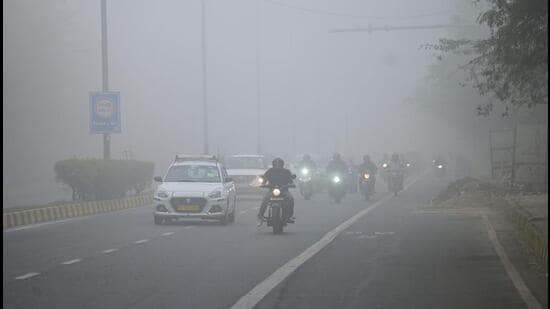
The battle against severe pollution days in Delhi is entering a more complex phase, moving beyond visible, directly emitted pollutants to those formed invisibly in the atmosphere. Early successes in controlling PM10 and PM2.5 through measures like public transport conversion to CNG and tighter fuel standards have plateaued.
Scientists now understand that a substantial share of PM2.5 is secondary particulate matter, created when gases like sulphur dioxide, nitrogen oxides, and ammonia react. Studies indicate these secondary inorganic aerosols account for close to a third of Delhi's annual PM2.5, a figure that rises significantly during winter smog.
This invisible pollution poses a challenge for public perception and existing action plans, which were designed for primary emitters. Addressing it requires a non-linear approach, targeting precursor gases through broader, earlier, and more intensive policy interventions.
Global examples from Los Angeles, London, and Beijing demonstrate that overcoming such plateaus involves coordinating reductions of precursor gases like NOx and VOCs, and often requires regional cooperation and sustained effort.
Delhi NCR faces unique challenges due to its large population and near-landlocked airshed. Effective strategies must include treating secondary particulate matter as a core objective, sequencing precursor controls NCR-wide, and considering particle size in policy.
Future efforts must also address airshed-wide coordination, and ensure equity by linking precursor control with housing improvements and clean energy access. Emergency response systems should evolve to predictive action. The goal is not immediate eradication but consistent reduction of pollution levels and exposure.