Home / Environment / Delhi Pollution: New Study Targets Hidden Emission Sources
Delhi Pollution: New Study Targets Hidden Emission Sources
21 Jan
Summary
- A new study aims to create an updated emission inventory for Delhi's air quality.
- Secondary particulates, formed from gases, significantly contribute to pollution.
- Meteorology plays a crucial role in trapping pollutants during winter.
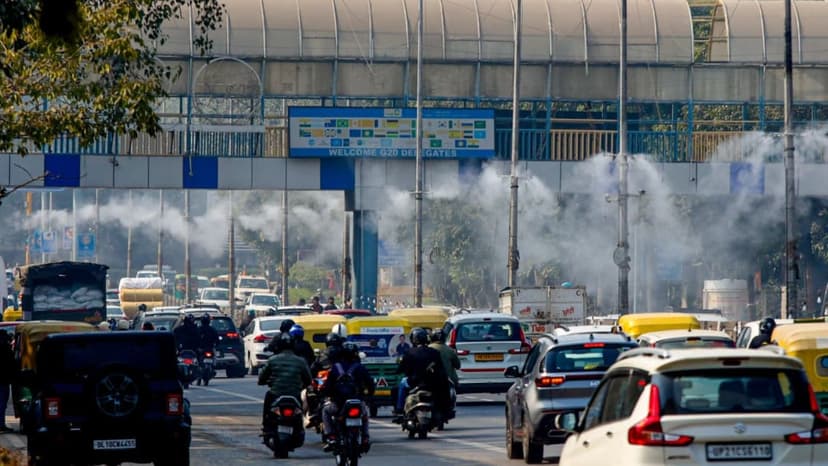
Delhi's air quality is undergoing a rigorous scientific investigation with the launch of a new source apportionment study by the Commission for Air Quality Management (CAQM). This comprehensive study aims to develop an updated inventory of emissions, utilizing high-resolution mapping to pinpoint sources ranging from household heating to crop residue burning.
The initiative seeks to overcome inconsistencies in previous studies by adopting a unified, data-driven approach. Findings will be integrated into the Air Quality Early Warning System and Decision Support System for more accurate, real-time data. The study will map emissions on a high-resolution 500m x 500m grid.
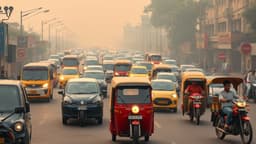
Recent reports highlight that secondary particulates, formed from gases emitted by vehicles and biomass, are a significant contributor to pollution, especially during winter. Atmospheric chemistry within the Indo-Gangetic Plain amplifies particulate pollution through secondary aerosol formation. Transport remains a primary source, with non-exhaust emissions and daily vehicle influx aggravating the issue.
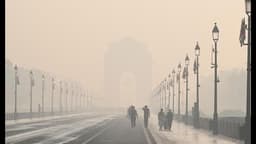
While combustion and biomass burning also contribute, experts caution that severe winter pollution spikes are exacerbated by meteorological conditions. A 'lid' effect, caused by low wind speeds and a shallow Planetary Boundary Layer, traps pollutants close to the ground, preventing dispersion and worsening air quality.