Home / Environment / Delhi's Air Crisis: Transport Pollution Solution
Delhi's Air Crisis: Transport Pollution Solution
9 Dec, 2025
Summary
- Transport causes nearly 50% of Delhi's winter air pollution.
- Phasing out old vehicles could cut Delhi's pollution by 20%.
- Coordinated action with NCR cities is crucial for success.
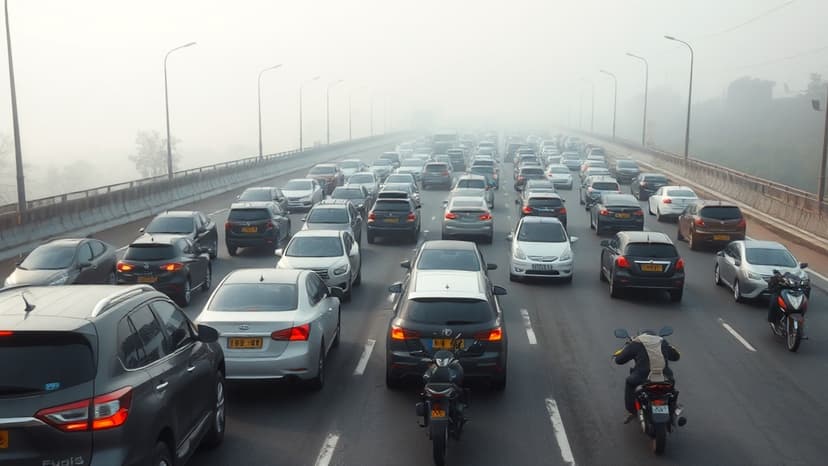
Transport is a primary source of air pollution in Delhi, contributing nearly 50% during winter months, with vehicle numbers projected to rise by 20% by 2030. Delhi has a history of pioneering transport reforms, including a successful CNG transition and early adoption of BS-VI fuel standards. The city also leads in EV adoption, with generous subsidies.
A comprehensive four-step strategy is proposed to tackle transport pollution. This includes phasing out BS-IV and older vehicles by the end of 2026, a measure that has proven effective in reducing local emissions. Additionally, BS-IV vehicles would face temporary winter restrictions until 2028 to mitigate peak pollution.
Furthermore, the plan emphasizes the aggressive electrification of commercial fleets by 2030, a move expected to significantly reduce emissions from heavily utilized vehicles. In the long term, reducing personal vehicle use through enhanced public transport and travel demand management strategies is deemed critical. However, the article stresses that Delhi cannot solve this issue alone, necessitating coordinated action with neighboring NCR districts.