Home / Environment / Delhi Air: Local Sources Fuel Crisis Before Stubble Burning
Delhi Air: Local Sources Fuel Crisis Before Stubble Burning
15 Nov
Summary
- Local pollution sources contributed a third of Delhi's PM2.5 in late October.
- Open waste burning and road dust were key local contributors.
- A short-term air quality improvement is expected, but not for long.
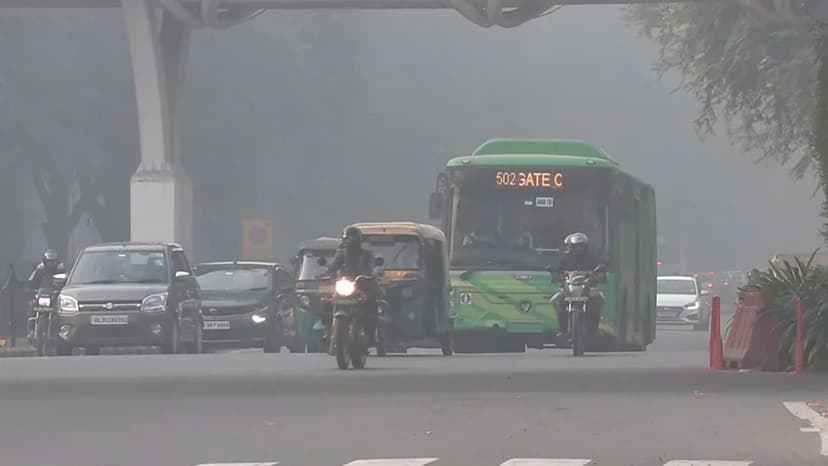
In the final week of October, local pollution sources such as open waste burning, road dust, and construction activity significantly contributed to Delhi's PM2.5 levels, accounting for approximately one-third of the total pollution. This occurred even after the Commission for Air Quality Management (CAQM) invoked Stage I of the Graded Response Action Plan (GRAP) on October 21, indicating that restrictions were insufficient to curb these immediate contributors.
Biomass burning, including domestic solid fuels, accounted for the largest share of PM2.5 pollution at 25.5% on Saturday, November 15, 2026. Secondary organic aerosols and vehicular emissions followed, contributing 23.6% and 17.4% respectively. Light rain might offer a temporary respite on Sunday, November 16, 2026, but air quality is predicted to deteriorate again from Monday onwards.
As pollution control measures intensified in early November, the contribution of local sources like construction dust decreased. However, regional factors, particularly crop-residue burning, became more prominent, peaking at 30% of Delhi's PM2.5 load on November 4, 2026, before the major firecracker emissions during Diwali. Data from the Indian Agricultural Research Institute indicates a 27% decrease in paddy-residue burning incidents between September 15 and November 13, 2026, compared to the previous year, with Punjab reporting the highest number of incidents.


