Home / Environment / Delhi's Hidden Air Pollution: Drones Reveal Shocking Heights
Delhi's Hidden Air Pollution: Drones Reveal Shocking Heights
16 Feb
Summary
- Drone sensors recorded PM2.5 levels 60% higher at 100 meters.
- Elevated pollution at high altitudes affects residents of tall buildings.
- Haze formation is linked to humidity, stable air, and low winds.
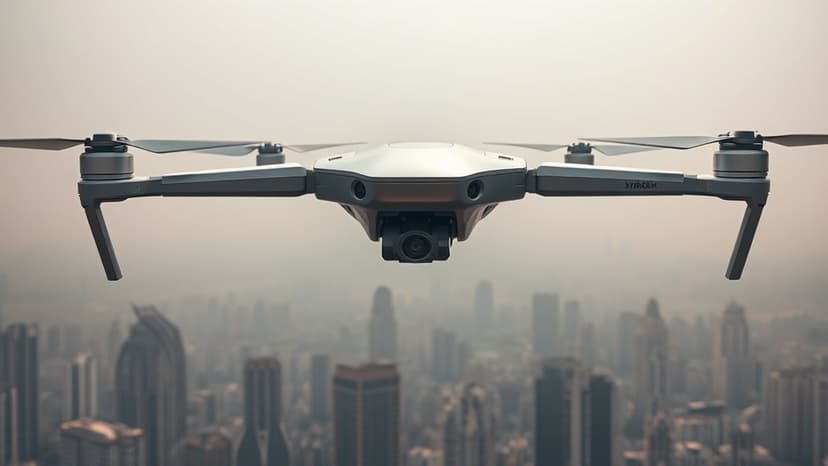
Air pollution in Delhi may be considerably worse at higher altitudes than surface monitoring stations indicate, according to a new study. Researchers utilized drone-mounted sensors to measure fine particulate matter (PM2.5) at various heights, from the ground up to 100 meters.
The study, conducted over five days in March 2021, found that PM2.5 levels at 100 meters were approximately 60% higher than those recorded at ground level. This suggests that individuals living or working in buildings with 28-30 stories could face greater exposure to pollutants than current measurements reflect.
Published in npj Clean Air, the findings point to stable, humid early-morning conditions as a primary cause for this elevated haze. During these periods, the atmospheric boundary layer remained shallow, trapping pollutants and facilitating the formation of secondary particles.
Specific atmospheric factors, including high humidity (above 70%), weak winds (below 2 m/s), and the growth of hygroscopic aerosols, collectively intensified the early-morning haze. On March 18, a notable 60% increase in PM concentrations was observed with altitude, reaching 160 micrograms per cubic meter at higher elevations compared to 100 micrograms per cubic meter at the surface.