feedzop-word-mark-logo
searchLogin
Feedzop
homeFor YouUnited StatesUnited States
You
bookmarksYour BookmarkshashtagYour Topics
Trending
Terms of UsePrivacy PolicyAboutJobsPartner With Us

© 2026 Advergame Technologies Pvt. Ltd. ("ATPL"). Gamezop ® & Quizzop ® are registered trademarks of ATPL.

Gamezop is a plug-and-play gaming platform that any app or website can integrate to bring casual gaming for its users. Gamezop also operates Quizzop, a quizzing platform, that digital products can add as a trivia section.

Over 5,000 products from more than 70 countries have integrated Gamezop and Quizzop. These include Amazon, Samsung Internet, Snap, Tata Play, AccuWeather, Paytm, Gulf News, and Branch.

Games and trivia increase user engagement significantly within all kinds of apps and websites, besides opening a new stream of advertising revenue. Gamezop and Quizzop take 30 minutes to integrate and can be used for free: both by the products integrating them and end users

Increase ad revenue and engagement on your app / website with games, quizzes, astrology, and cricket content. Visit: business.gamezop.com

Property Code: 5571

Home / Environment / Deepavali's Plastic Pollution Problem: How India's Festival of Lights Is Drowning in Waste

Deepavali's Plastic Pollution Problem: How India's Festival of Lights Is Drowning in Waste

10 Oct, 2025

Summary

  • India generates 1.6 lakh tonnes of municipal solid waste daily, with just over half processed
  • Deepavali week sees sharp spikes in waste generation, with cities like Nashik and Vadodara reporting 20-750 tonne increases
  • Food waste during festivals is a significant contributor, with Indian households wasting 55 kg per person annually
Deepavali's Plastic Pollution Problem: How India's Festival of Lights Is Drowning in Waste

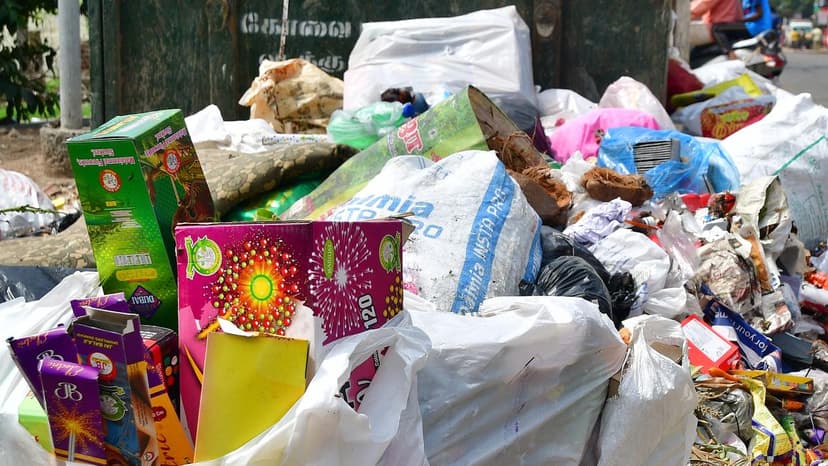
In the lead-up to Deepavali 2025, India's festival of lights, the country is grappling with a growing environmental challenge: the surge of waste generated during the celebrations. According to the Swachch Bharat Mission, India generates close to 1.6 lakh tonnes of municipal solid waste daily, with just over half of it being processed. The rest ends up in overflowing landfills or open dumps.

During the Deepavali week this year, several cities have reported significant spikes in waste generation. In 2023, Nashik collected more than 750 tonnes of additional garbage over the festive week, while Vadodara saw a 20% jump during the Navratri-Dasara stretch. This surge is driven by the increased use of packaging, food waste, and a rise in e-waste from low-cost electronics gifted during the celebrations.

Food waste is a silent but significant contributor, with Indian households wasting around 55 kilograms of food per person every year, much of it during festivals. Decomposing food emits methane, a greenhouse gas far more potent than carbon dioxide. Additionally, the country's plastic recycling rate remains low, at around 13%, making it difficult to handle the influx of laminated gift wraps, glossy chocolate boxes, and other non-recyclable packaging.

Experts argue that the time has come to align Deepavali gifting traditions with ecological responsibility. They suggest creating "Deepavali gifting codes" that promote sustainable packaging, useful gifts, and food waste reduction. Strengthening urban infrastructure, tightening policy on packaging standards, and using economic nudges can also help curb the environmental impact of the festivities. Ultimately, a shift in the cultural narrative, where thoughtfulness becomes the new status symbol, can lead to lasting change.

Disclaimer: This story has been auto-aggregated and auto-summarised by a computer program. This story has not been edited or created by the Feedzop team.
During the Deepavali week in 2025, several Indian cities saw a significant increase in waste generation, with Nashik collecting over 750 tonnes of additional garbage and Vadodara experiencing a 20% jump. This surge is driven by the increased use of packaging, food waste, and a rise in e-waste from low-cost electronics gifted during the celebrations.
According to the UN Food Waste Index, Indian households waste around 55 kilograms of food per person every year, with a large part of this happening during festivals. Decomposing food emits methane, a greenhouse gas far more potent than carbon dioxide.
Experts suggest creating "Deepavali gifting codes" that promote sustainable packaging, useful gifts, and food waste reduction. Strengthening urban infrastructure, tightening policy on packaging standards, and using economic nudges can also help curb the environmental impact of the festivities. Ultimately, a shift in the cultural narrative, where thoughtfulness becomes the new status symbol, can lead to lasting change.
Read more news on

Indiaside-arrowEnvironmentside-arrowVadodaraside-arrow
•
trending

Islamabad suicide blast kills 31

trending

Ronaldo trains with Al Nassr

trending

India A vs Namibia live

trending

Vaibhav Suryavanshi scores 175

trending

VTU adopts Artificial Super Intelligence

trending

Riyan Parag scores fifty

trending

T20 World Cup opening ceremony

trending

Tiigers Kolkata reach ISPL final

trending

Al Ettifaq favored vs Damac

You may also like

Indore's Clean City Myth: Water Deaths Expose Deeper Flaws

18 Jan • 110 reads

article image

Vantangiya Women: From Forest Dwellers to Fashion Stars

13 Jan • 143 reads

article image

New Train Line Bolsters India's Border Security

29 Nov, 2025 • 346 reads

article image

ISKCON Temple in Navi Mumbai Adopts Mechanical Elephant to Protect Real Ones

10 Nov, 2025 • 450 reads

article image

Goa Police Bust Massive Interstate Liquor Smuggling Racket, Seize Rs 1.5 Crore Worth of Goods

4 Nov, 2025 • 459 reads

article image