Home / Environment / Death Valley Explodes with Rare Wildflower Superbloom
Death Valley Explodes with Rare Wildflower Superbloom
10 Mar
Summary
- Death Valley National Park is experiencing a rare superbloom of wildflowers.
- Steady rainfall since October has led to this vibrant, once-in-a-decade event.
- The blooming desert gold, phacelia, and primrose are expected to last through March.
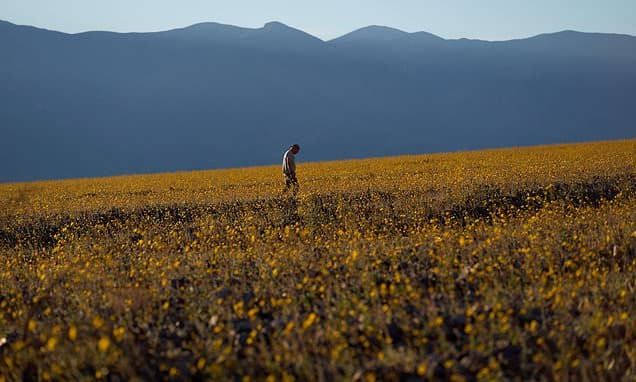
Death Valley National Park, typically recognized as North America's driest region, is currently alive with a stunning display of wildflowers. This phenomenon, known as a superbloom, is a rare occurrence for the park, usually transforming the brown desert into vibrant expanses of color. This year's bloom is considered the best since 2016, following consistent rainfall and warm temperatures over the past six months.
The park received nearly a year's worth of rain since October, including the wettest November on record, totaling 1.76 inches. This moisture allowed seeds buried in the soil for years to germinate. The landscape is now blanketed in desert gold, with accents of purple phacelia, brown-eyed primrose, and pink desert five-spot.
While lower elevations are expected to display flowers until mid-to-late March, higher elevations will continue to bloom from April through June. Park officials advise visitors to stay on marked trails, refrain from picking flowers, and be aware that touching purple phacelia can cause skin irritation. The superbloom offers a unique opportunity to witness the resilience of desert life, with many plants adapted to persist through extreme conditions.
Visitors are encouraged to check for viewing updates outside the Furnace Creek Visitor Center, with areas like Ashford Mill also noted for their vibrant displays. The sphinx moth caterpillar can also be observed on the desert floor before its transformation into a moth. This exceptional event highlights the dynamic nature of deserts and the remarkable strategies life employs to thrive in harsh environments.