Home / Environment / US Firefighters Battle Worsening Drought, Record Fires
US Firefighters Battle Worsening Drought, Record Fires
14 Jul
Summary
- Three firefighters died battling flames, with more losses in a recent crash.
- Record low snowpack and dry, windy weather fuel hundreds of homes burned.
- Preparedness level is at 4, with resources stretched thin nationwide.
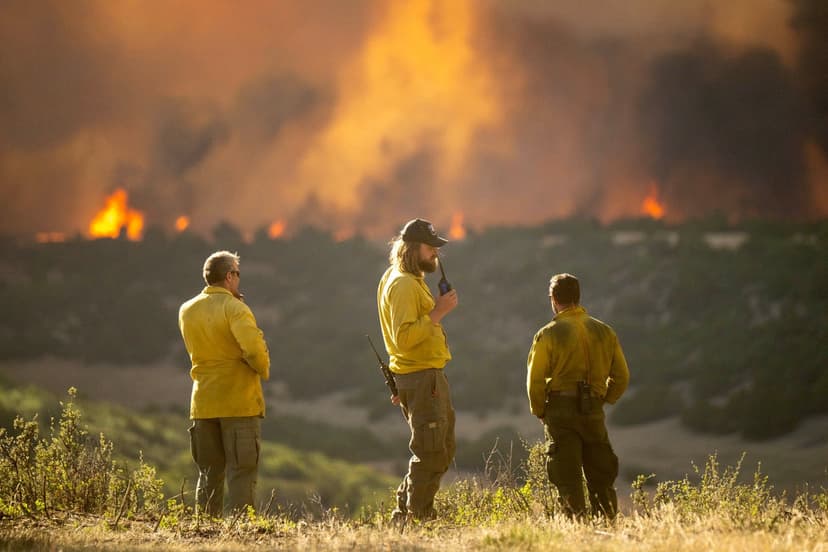
Wildfire season has proven deadly this year, with firefighters facing challenging conditions. Three firefighters lost their lives battling flames in Colorado, and a pilot died when a helicopter crashed while assisting another fire. These events underscore the risks as persistent drought, worsened by record-low snowpack and hot, dry, windy weather, fuels hundreds of home fires across the West.
The national preparedness level has risen to 4, indicating significant fire activity and increasing demands on resources. Thousands of firefighters, engines, bulldozers, helicopters, and air tankers are being strategically positioned to tackle blazes early. Despite these efforts, resources are strained as new fires emerge daily. The U.S. Wildland Fire Service is prioritizing pre-positioning crews and aircraft in high-risk areas for quicker initial attacks.
Over 2,000 fires have been confirmed since the start of July alone, with more than 5,600 square miles burned nationwide, exceeding the decade's average. This surge has led to the deployment of highly skilled incident management teams from various regions, including Alaska and California. Currently, 16 such teams oversee nearly 17,000 personnel across more than a dozen states. Sharing resources among geographic area coordination centers (GACCs) is crucial but requires a delicate balance to avoid overextending local capacities and increasing firefighter burnout.
Looking ahead, above-normal wildfire potential is expected from the Four Corners Region north to Oregon, Idaho, and Washington through September. Fire managers are also reassessing strategies, with a current directive to attack every blaze immediately to limit growth, a shift from earlier methods that allowed some fires to burn for land management purposes. Efforts are underway to enhance detection, including volunteer lookout towers and the launch of space-based detection systems by California.


