Home / Environment / China's Air Quality Miracle: Smog Cleared, Skies Bright
China's Air Quality Miracle: Smog Cleared, Skies Bright
17 Feb
Summary
- Beijing PM2.5 levels dropped dramatically since 2013.
- National air pollution fell 41% in the decade starting 2014.
- China aims to virtually eliminate severe air pollution by 2025.
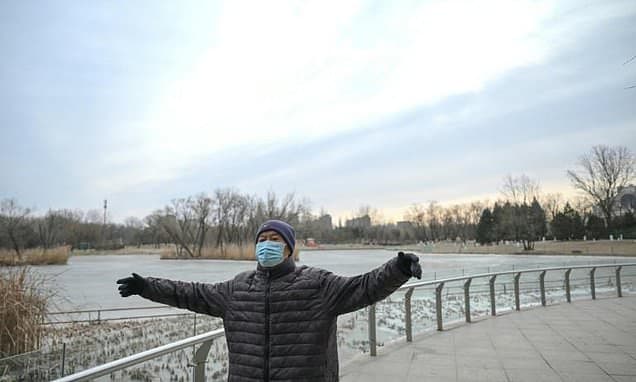
Fifteen years ago, Beijing's Liangma riverbanks were deserted and smog-choked during winter. Today, these same areas are lively with families and pensioners enjoying the outdoors.
This transformation is the result of a sustained campaign by China to combat its notoriously poor air quality. Since 2013, Beijing has seen a 69.8 percent decrease in PM2.5 levels. Nationwide, particulate pollution fell by 41 percent between 2014 and 2024, increasing average life expectancy by 1.8 years.
China's rapid development and reliance on coal led to severe air quality issues by the 2000s. Despite early efforts like improved factory technology and traffic controls for events like the 2008 Olympics, the problem persisted until a ten-point action plan was launched in 2013.
This plan involved expanded monitoring, factory upgrades, relocation of coal plants, and vehicle restrictions in major cities, laying the groundwork for electrification. Ambitious quantitative goals were set, proving instrumental in achieving significant improvements.
While substantial progress has been made, air quality in many Chinese cities still exceeds WHO recommendations. For instance, China defines 'good' air quality at PM2.5 levels below 35 micrograms per cubic meter, far higher than the WHO's recommended five micrograms.
China aims to "basically eliminate severe air pollution by 2025." However, the pace of reduction has slowed in recent years as the easiest targets have been met. Efforts now focus on finding cleaner industrial production methods and transitioning away from fossil fuels towards clean energy.