Home / Environment / Beavers Create Greenhouse Gas Hotspots in Chile
Beavers Create Greenhouse Gas Hotspots in Chile
24 Jul
Summary
- North American beavers introduced in 1946 have altered vast forest areas.
- Beaver dams turn forests into oxygen-deprived marshes, releasing methane.
- Beaver ponds emit twice as much methane as natural shallow lakes.
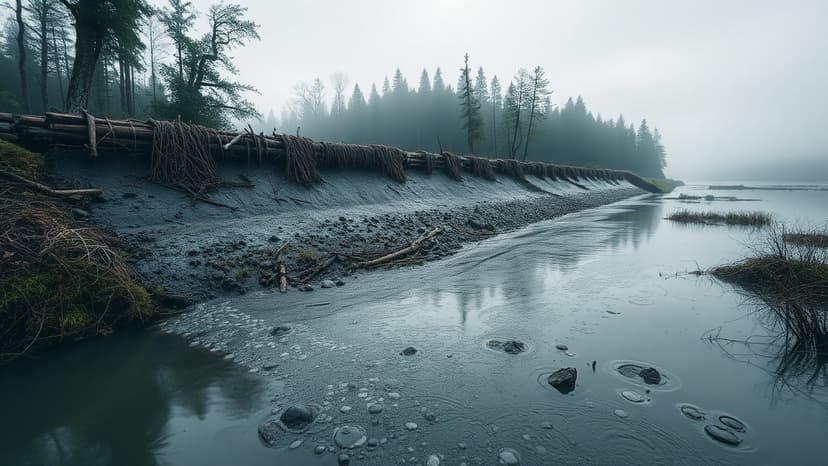
Introduced in 1946, North American beavers have significantly altered southern Chile's natural environment. Their ecosystem engineering, primarily through dam construction, is transforming extensive forest tracts into marshes and bogs.
These waterlogged landscapes result from beavers felling trees and damming waterways. The resulting oxygen-poor soils accumulate organic matter, which is then decomposed by microbes releasing methane, a potent greenhouse gas. Studies indicate beaver ponds in Tierra del Fuego emit roughly twice the methane of natural shallow lakes.
The invasion impacts forest structure, stream flow, and soil conditions, with consequences extending beyond visible changes. Increased herbaceous plants, including invasive species, signal further ecological disruption. This invasive species' effect demonstrates how altering water levels and sediment flow can persistently shape landscapes.


