Home / Environment / Cheetah Mummies Reveal Ancient Subspecies in Arabia
Cheetah Mummies Reveal Ancient Subspecies in Arabia
20 Feb
Summary
- Seven naturally mummified cheetahs were discovered in Saudi Arabian caves.
- DNA analysis revealed two subspecies of cheetah once roamed the peninsula.
- The findings aid crucial cheetah reintroduction efforts in the region.
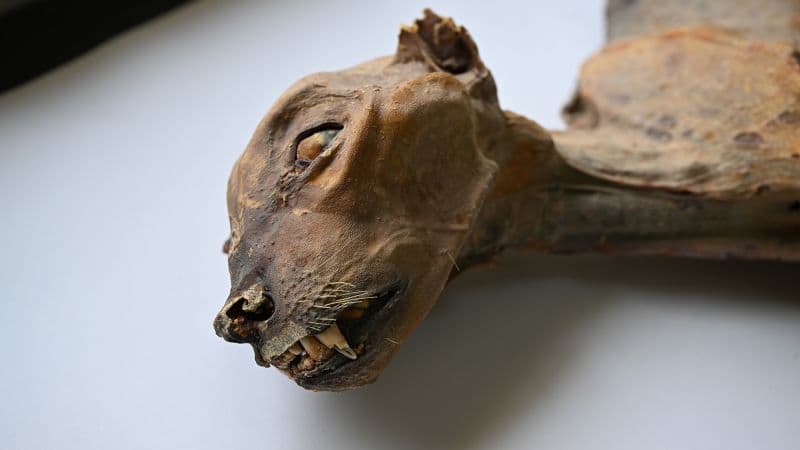
Scientists in Saudi Arabia have unearthed seven naturally mummified cheetahs in caves near Arar, with the remains largely intact. DNA analysis of three mummies revealed that at least two subspecies of cheetah, including the Northwest African cheetah, once inhabited the Arabian Peninsula, challenging the prior belief that only the Asiatic cheetah was present.
This groundbreaking discovery, published in January, provides crucial evidence for cheetah reintroduction programs. Knowing the exact lineages that historically thrived in the area allows conservationists to focus on ecologically appropriate introductions, transforming reintroduction plans into well-informed strategies based on scientific evidence.
The mummified cheetahs, some dating back up to 4,000 years and others as recent as a century ago, indicate that the Arabian Peninsula served as a vital natural corridor for cheetah migration rather than an ecological dead end. The exceptional preservation is attributed to the caves' hyper-arid conditions.
Conservationists believe that with restored prey populations and reduced human impact, Saudi Arabia is well-positioned to support the recovery of cheetah populations. The presence of multiple cheetah lineages over millennia highlights their significant role in the ecosystem and supports broader rewilding efforts.