Home / Environment / Warmer World Transforms Northern Forests
Warmer World Transforms Northern Forests
2 Sep
Summary
- Boreal forests are becoming more deciduous due to global heating.
- Extreme events like wildfires favor deciduous over evergreen trees.
- This shift has implications for carbon, water, and energy cycles.
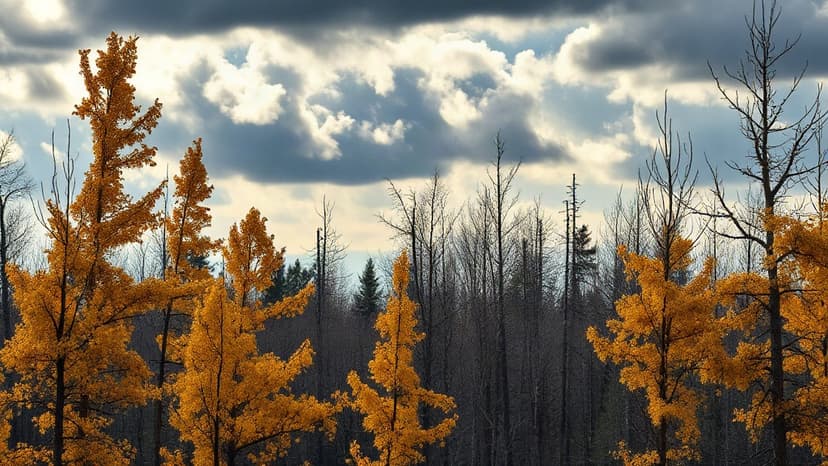
Northern boreal forests are undergoing a significant transformation, with a noticeable shift from evergreen dominance to a greater prevalence of deciduous trees. This change is directly linked to global heating, which is creating a warmer and less stable environment. Research utilizing vegetation models predicts this trend will continue through the 21st and 22nd centuries.
Extreme weather events, such as wildfires and intense storms, are increasingly disturbing these vast forests. Following such disturbances, deciduous species are establishing more rapidly and beginning to dominate the landscape. The extended growing seasons and increased soil nitrogen associated with rising temperatures also disproportionately benefit deciduous trees, further accelerating their establishment.
Data from regions like Alaska and Canada already indicates this transition is underway, with an increase in deciduous saplings observed. While evergreen species will persist, they are projected to no longer be the primary tree type in boreal areas. This ecological shift has profound implications for crucial environmental processes, including carbon sequestration, water regulation, and energy balance within these high-latitude ecosystems.


