Home / Environment / Ocean Carbon Capture: Tech Aims to Boost Investor Trust
Ocean Carbon Capture: Tech Aims to Boost Investor Trust
26 Jan
Summary
- Companies are developing tech to measure blue carbon's CO2 absorption.
- Fujitsu's underwater drones create digital twins of marine habitats.
- Blue carbon offers higher prices and added environmental benefits.
Investor confidence remains a primary obstacle for blue carbon initiatives, stemming from difficulties in quantifying carbon stored in marine sediments and verifying the additionality of carbon sequestration.
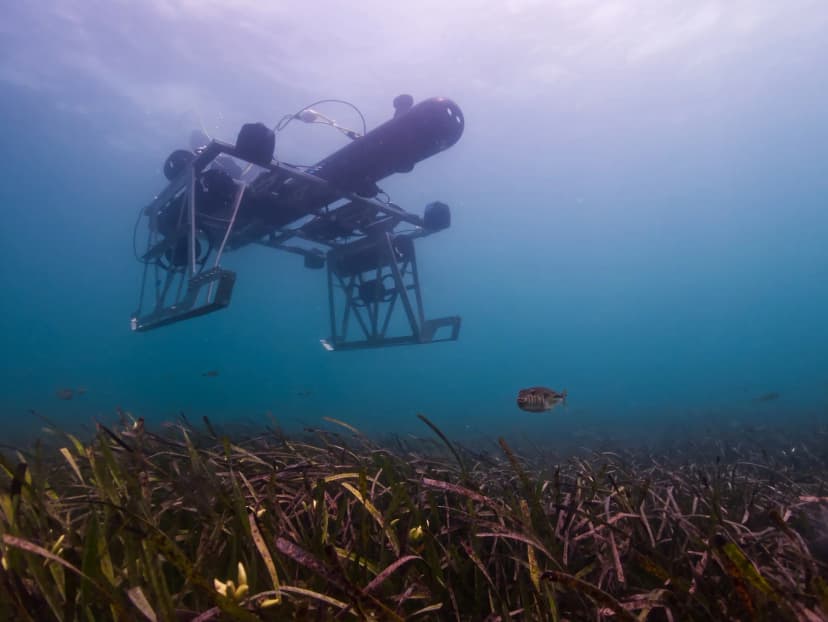
Fujitsu Ltd. is pioneering new technologies, including microwave-sized underwater drones, to measure carbon dioxide absorbed by coastal ecosystems. These drones scan marine life and sediment, enabling the creation of digital twins to estimate CO2 uptake and forecast conservation impacts.
Blue carbon projects, such as those involving mangroves and salt marshes, are attractive due to their high carbon storage capacity, potentially five times that of tropical forests, and resilience to environmental threats. However, high operating costs and limited supply present challenges, as noted by BloombergNEF.
Despite technological advancements like hyperspectral satellites and underwater drones, uncertainties in carbon burial rates persist, with studies showing significant variations in estimates for different marine habitats. These technologies are crucial for reducing measurement risk, a key concern for investors.
Efforts are also focused on proving additionality, ensuring that carbon offsets are awarded only when human intervention demonstrably leads to increased CO2 absorption. This is vital to avoid undermining climate goals. Companies like Ulysses Maritime Technologies are reducing restoration costs through automated planting systems, making blue carbon projects more viable.
Japan saw its first blue carbon credits generated from a restoration project near Uwajima last year, facilitated by Fujitsu's drone technology. If monitoring technologies become more efficient and cost-effective, the blue carbon market could see significant growth, projected by BNEF to expand from 3.1 million tons of CO2 equivalent in 2022 to 40.5 million tons by midcentury.