Home / Environment / Bacteria Turn Sand to Stone, Saving Coastlines
Bacteria Turn Sand to Stone, Saving Coastlines
17 Mar
Summary
- Bio-engineering uses bacteria to create sandstone from sand.
- This method strengthens coastlines against erosion.
- It offers a sustainable alternative to traditional methods.
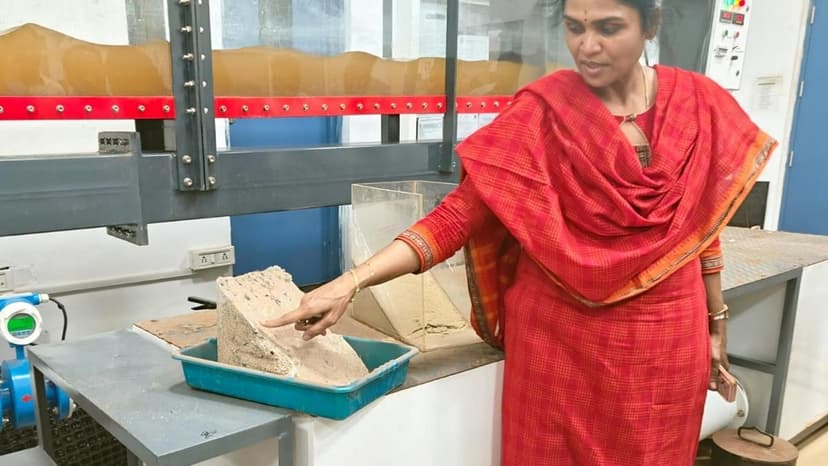
A groundbreaking bioengineering method, Microbially Induced Calcite Precipitation (MICP), is revolutionizing coastal erosion control. This innovative technique employs specific bacteria to strengthen sand, transforming it into durable sandstone within approximately two weeks. Laboratory experiments and patent filings have paved the way for outdoor commercial testing of this promising nature-based solution.
Developed at IIT Indore, MICP utilizes Sporosarcina pasteurii bacteria, which produce urease, to facilitate bio-mediated calcite formation. Treated sand samples demonstrate significantly enhanced resistance to erosion caused by rainfall and wave action. This development is crucial given that nearly 34% of India's extensive coastline is vulnerable to erosion.
This bio-mediated approach contrasts with conventional hard engineering structures like seawalls, which are costly and disrupt natural processes, and soft methods such as beach nourishment that require continuous upkeep. MICP presents a sustainable, economical, and environmentally friendly alternative.
The research aligns with India's broader development goals, including the Blue Economy initiative and climate-resilient infrastructure objectives outlined in the Viksit Bharat 2047 vision. It also supports global sustainability efforts, contributing to UN Sustainable Development Goals like Climate Action, Life Below Water, and Sustainable Cities and Communities.