


Home / Environment / Bengaluru Drains Its Aquifers: A Water Crisis Looms
Bengaluru Drains Its Aquifers: A Water Crisis Looms
14 Apr
Summary
- Bengaluru faces extreme groundwater withdrawal, exceeding sustainable limits.
- A weak monsoon in 2024 left nearly half of Bengaluru's borewells dry.
- The city's infrastructure suppresses natural rainwater recharge and lakes.
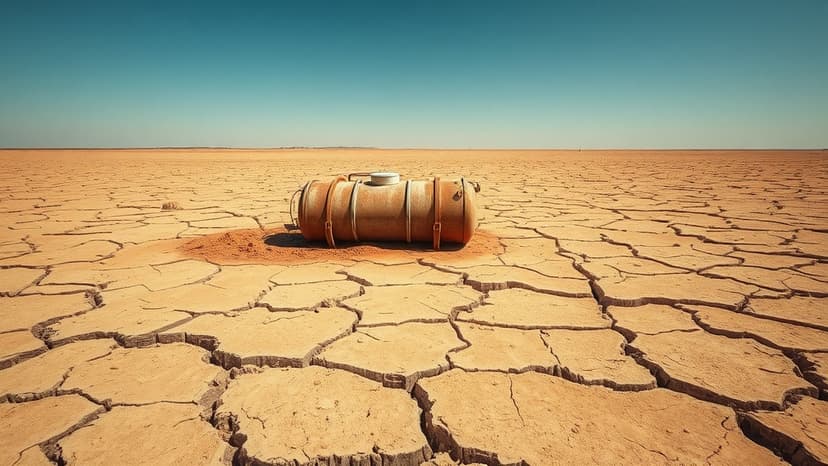
Bengaluru is dangerously over-extracting its groundwater, with certain areas like Bengaluru East Taluka drawing 378% of sustainably extractable volume. This situation is critical as the region's geology naturally stores and recharges water slowly. Compounding this, urban development suppresses rainwater percolation.
A weak monsoon in 2024 resulted in nearly half of Bengaluru's 14,000 borewells becoming dry. Despite government efforts to supply water to underserved areas, progress has been slow, leaving many reliant on water tankers. Studies indicate the crisis has expanded to new neighborhoods like Koramangala and Hebbal.
The city's approach of treating water supply as infinitely expandable, coupled with a preference for grey over green infrastructure, has sealed the ground against replenishment. A lack of integrated management of pipeline supply, groundwater, and wastewater leads consumers to default to convenient but unsustainable tanker solutions.
Experts advocate for minimizing distribution losses, penalizing overextraction, and mandating decentralized wastewater recycling for non-potable uses. The long-term solution proposed is for Bengaluru to become a 'sponge city,' restoring natural water pathways to capture runoff and aligning land-use planning with the environment's recharge capacity.
