

Home / Environment / Bali Landfill Closure Sparks Backyard Burns
Bali Landfill Closure Sparks Backyard Burns
16 Apr
Summary
- Suwung landfill closure leads to widespread backyard trash burning.
- Bali faces a growing garbage crisis amid insufficient disposal options.
- Waste-to-energy facilities are planned, expected by late 2027.
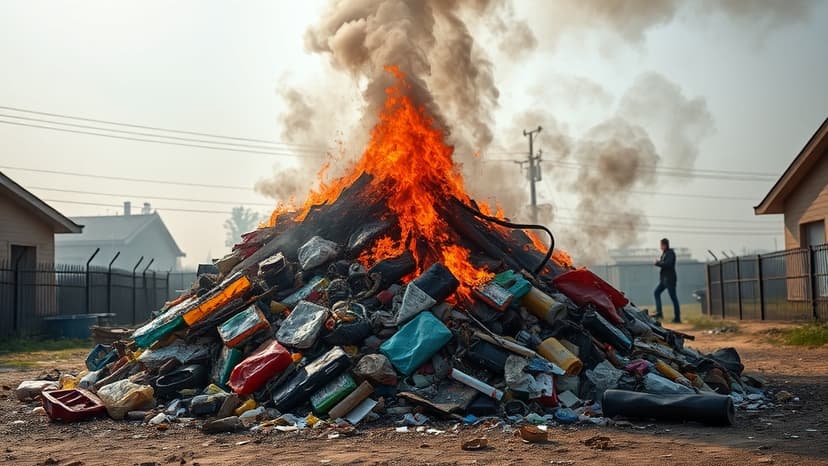
The partial closure of Bali's Suwung landfill, a key waste disposal site, is now causing thousands of residents to resort to burning trash in their own yards. This shift has ignited widespread environmental and health worries on the popular holiday island.
The Suwung landfill, which previously managed approximately 1,000 tons of waste daily, ceased accepting organic waste as of April 1, 2026. This measure was implemented as the site approaches its capacity, aiming to redirect organic matter for composting.
Organic waste, including food scraps and hotel waste, constitutes about two-thirds of Bali's total waste. Its decomposition in landfills produces methane, a potent greenhouse gas. Without sufficient alternative disposal methods, residents are now burning waste or dumping it in rivers and roadsides.
While some tourist areas have private waste disposal channels, the Suwung situation intensifies Bali's overall rubbish problem. Poor waste management infrastructure has already led to significant plastic pollution in the island's waterways and coastal areas.
In response, Indonesia's sovereign wealth fund, Danantara, plans to construct waste-to-energy facilities in Denpasar and other cities. In Bali, a partnership with China's Zhejiang Weiming Environmental Protection Co. aims to have a facility operational by the end of 2027.
Bali Governor I Wayan Koster views the waste-to-energy project as a hopeful development, acknowledging that the island is currently "under siege by garbage." He noted that until these facilities are functional, local administrators are promoting household waste sorting and composting, though this has proven challenging to enforce.
