Home / Environment / Dung Beetles: Australia's Ancient Pest Solution
Dung Beetles: Australia's Ancient Pest Solution
20 Aug
Summary
- European settlers introduced cattle, creating a dung problem for native beetles.
- CSIRO imported and released beetles starting in 1967 to manage manure.
- Introduced beetles bury dung, improving soil and reducing fly breeding.
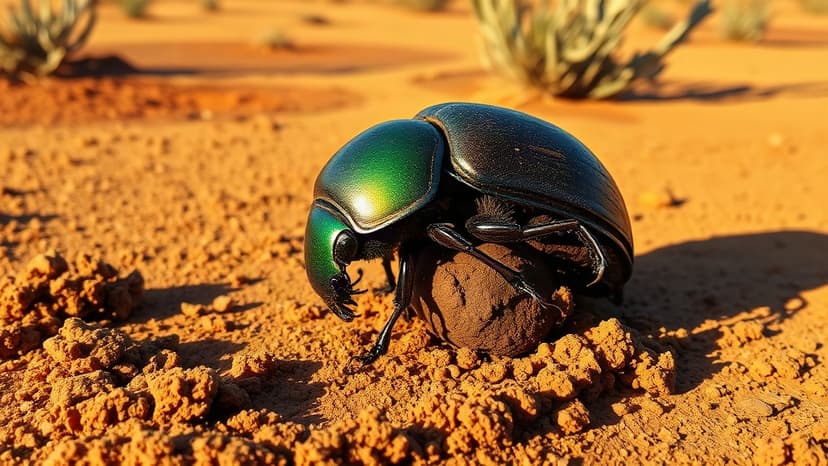
Australia's agricultural lands faced a mounting crisis for nearly two centuries due to cattle introduced by European settlers. The large, moist dung produced by these animals was unsuitable for native dung beetles, which had evolved to process the smaller, drier droppings of marsupials. This led to significant accumulations of manure by the mid-20th century, creating an agricultural issue and fostering bush fly populations.
Recognizing this ecological imbalance, entomologist George Bornemisza proposed importing foreign dung beetles better adapted to cattle manure. Following extensive research and testing, CSIRO commenced releases. An initial trial occurred in 1967, followed by a larger program from 1968 to 1970, during which approximately 275,000 beetles of four species were introduced across cattle-grazing areas.
The successful implementation of this biological control involved careful selection and testing of species suited to Australia's diverse climates. Beetles like Onthophagus gazella were particularly effective, rapidly spreading and burying dung. This process not only removed waste from the surface but also enriched the soil, improved its structure, and enhanced water infiltration, effectively turning an environmental problem into a sustainable ecosystem component.


