feedzop-word-mark-logo
searchLogin
Feedzop
homeFor YouUnited StatesUnited States
You
bookmarksYour BookmarkshashtagYour Topics
Trending
Terms of UsePrivacy PolicyAboutJobsPartner With Us

© 2026 Advergame Technologies Pvt. Ltd. ("ATPL"). Gamezop ® & Quizzop ® are registered trademarks of ATPL.

Gamezop is a plug-and-play gaming platform that any app or website can integrate to bring casual gaming for its users. Gamezop also operates Quizzop, a quizzing platform, that digital products can add as a trivia section.

Over 5,000 products from more than 70 countries have integrated Gamezop and Quizzop. These include Amazon, Samsung Internet, Snap, Tata Play, AccuWeather, Paytm, Gulf News, and Branch.

Games and trivia increase user engagement significantly within all kinds of apps and websites, besides opening a new stream of advertising revenue. Gamezop and Quizzop take 30 minutes to integrate and can be used for free: both by the products integrating them and end users

Increase ad revenue and engagement on your app / website with games, quizzes, astrology, and cricket content. Visit: business.gamezop.com

Property Code: 5571

Home / Environment / From Pest Control to Plague: The Cane Toad's Rise

From Pest Control to Plague: The Cane Toad's Rise

2 Feb

•

Summary

  • Cane toads, introduced in 1935 for beetle control, became a destructive invasive species.
  • These poisonous toads threaten 75 species of native Australian animals.
  • New gene-editing and taste-aversion research offers hope for control.
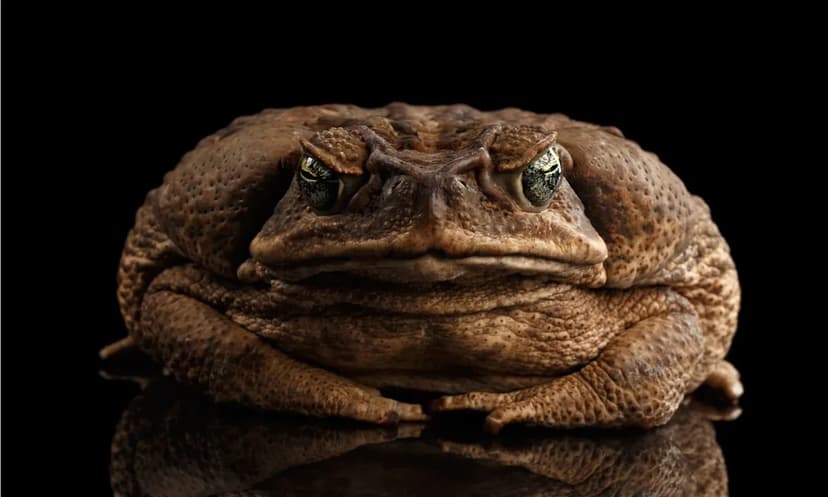
From Pest Control to Plague: The Cane Toad's Rise

Introduced to Australia in 1935 to combat sugarcane beetles, cane toads have become a significant ecological disaster. The toads, originally imported from Hawaii, failed to control the beetle larvae and instead proliferated, becoming a widespread invasive species. Their toxic secretions pose a severe threat to native wildlife, impacting an estimated 75 species including crocodiles, snakes, and lizards.

Cane toads reproduce rapidly, laying thousands of eggs and expanding their range by up to 40 miles annually. Their opportunistic feeding habits also disrupt local ecosystems by depleting invertebrate populations. Decades of attempts to control them have largely failed, leading scientists to conclude that a broad-scale solution is unlikely.

However, ongoing research presents potential future strategies. Scientists are exploring gene-editing techniques to halt toad development at the tadpole stage. Additionally, conditioned taste aversion methods have shown success in teaching native crocodiles to avoid the poisonous toads, offering a glimmer of hope in managing this persistent environmental challenge.

Disclaimer: This story has been auto-aggregated and auto-summarised by a computer program. This story has not been edited or created by the Feedzop team.
Cane toads were introduced in 1935 to control native beetles that were damaging sugarcane crops in Queensland.
Cane toads are toxic and threaten approximately 75 species of native Australian animals, including crocodiles, snakes, and lizards, through poisoning.
Yes, researchers are exploring gene-editing to prevent toad development and using conditioned taste aversion to teach predators to avoid them.

Read more news on

Environmentside-arrowAustraliaside-arrowHawaiiside-arrow
trending

Chelsea beats West Ham 3-2

trending

Liverpool, Newcastle face injury woes

trending

WWE Royal Rumble in Riyadh

trending

Barcelona faces Elche in LaLiga

trending

Goretzka staying at Bayern Munich

trending

ICC T20 World Cup squads

trending

Gold, silver ETFs crashed

trending

Curran, Pandya T20Is stats compared

trending

Suryakumar Yadav T20I record

You may also like

Hawai'i's Smiley Spider: A Tiny Marvel

30 Jan • 10 reads

article image

Two Million Toads Safely Crossed Roads

28 Jan • 5 reads

article image

K'gari Island Tragedy: Teen's Autopsy Reveals Dingo Scars

24 Jan • 56 reads

article image

Science uses invasive toads for conservation

22 Jan • 9 reads

article image

Invasive Turtles Invade Coimbatore Wetlands

21 Jan • 55 reads

article image