feedzop-word-mark-logo
searchLogin
Feedzop
homeFor YouUnited StatesUnited States
You
bookmarksYour BookmarkshashtagYour Topics
Trending
Terms of UsePrivacy PolicyAboutJobsPartner With Us

© 2026 Advergame Technologies Pvt. Ltd. ("ATPL"). Gamezop ® & Quizzop ® are registered trademarks of ATPL.

Gamezop is a plug-and-play gaming platform that any app or website can integrate to bring casual gaming for its users. Gamezop also operates Quizzop, a quizzing platform, that digital products can add as a trivia section.

Over 5,000 products from more than 70 countries have integrated Gamezop and Quizzop. These include Amazon, Samsung Internet, Snap, Tata Play, AccuWeather, Paytm, Gulf News, and Branch.

Games and trivia increase user engagement significantly within all kinds of apps and websites, besides opening a new stream of advertising revenue. Gamezop and Quizzop take 30 minutes to integrate and can be used for free: both by the products integrating them and end users

Increase ad revenue and engagement on your app / website with games, quizzes, astrology, and cricket content. Visit: business.gamezop.com

Property Code: 5571

Home / Environment / Arctic Rivers Threatened by Climate Change

Arctic Rivers Threatened by Climate Change

21 Jan

•

Summary

  • Climate change is altering Arctic rivers, impacting ecosystems and communities.
  • Indigenous knowledge is being integrated with western science for research.
  • Arctic Rivers Project began in 2020, funded by NSF.
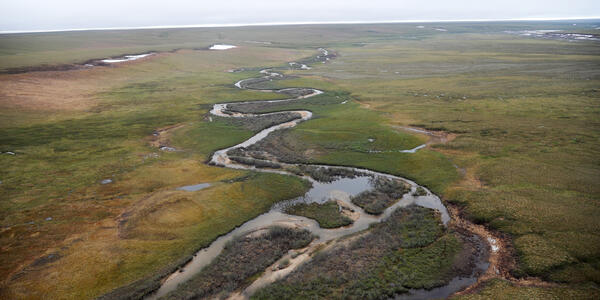
Arctic Rivers Threatened by Climate Change

Arctic rivers, essential for the cultural, spiritual, and subsistence activities of Indigenous communities, are facing significant disruptions due to climate change. Researchers are actively studying these impacts, integrating traditional Indigenous Knowledge with modern western scientific methods through the collaborative Arctic Rivers Project.

This project, which commenced in 2020 with funding from the National Science Foundation's Navigating the New Arctic Program, is investigating how rising temperatures are altering critical elements like snowmelt, river flow, and ice formation. These changes not only affect the delicate balance of aquatic ecosystems but also disrupt the transportation corridors that communities rely upon throughout the year.

Partnerships between institutions such as the Southwest CASC, Alaska CASC, Alaska Science Center, the University of Colorado Boulder, and the National Center for Atmospheric Research are central to this research. Their combined efforts seek to provide a comprehensive understanding of the challenges confronting Arctic rivers and the communities dependent upon them.

trending

CFTC modernizes crypto regulations

trending

Artemis II rocket on pad

trending

Apple TV service disruption

trending

Texas winter storm watch

trending

USGS studies Arctic river changes

trending

Maryland snow storm this weekend

trending

D.C. weekend winter storm

trending

NYC snowstorm this weekend

trending

Milwaukee winter weather advisory

Disclaimer: This story has been auto-aggregated and auto-summarised by a computer program. This story has not been edited or created by the Feedzop team.
Climate change is altering snowmelt, river flow, and ice patterns, disrupting Arctic rivers and the ecosystems and communities that depend on them.
The Arctic Rivers Project integrates Indigenous Knowledge with western science to study climate change impacts on Arctic rivers, starting in 2020.
Researchers from various USGS CASCs, the University of Colorado Boulder, and the National Center for Atmospheric Research are involved in the Arctic Rivers Project.

Read more news on

Environmentside-arrow

You may also like

Norway Swelters: 2025 Hottest Year on Record

7 Jan • 68 reads

article image

Climate Research Centers Face Funding Freeze

24 Nov, 2025 • 270 reads

article image

Coyote Cornered in North Dakota Garage Highlights Human-Wildlife Clash

16 Nov, 2025 • 291 reads

article image

Alaskan Wildlife Authorities Sued Over Aerial Bear Hunting Program

11 Nov, 2025 • 222 reads

Norilsk's Resilient Landscapes: Soil and Vegetation Bounce Back

10 Nov, 2025 • 158 reads

article image