Home / Environment / Ancient Underground Cities Offer Modern Climate Solutions
Ancient Underground Cities Offer Modern Climate Solutions
16 Nov
Summary
- Ancient underground cities like Derinkuyu offer stable temperatures year-round.
- Climate change intensifies heatwaves, droughts, and flooding risks globally.
- Underground spaces can be repurposed as climate shelters with careful planning.
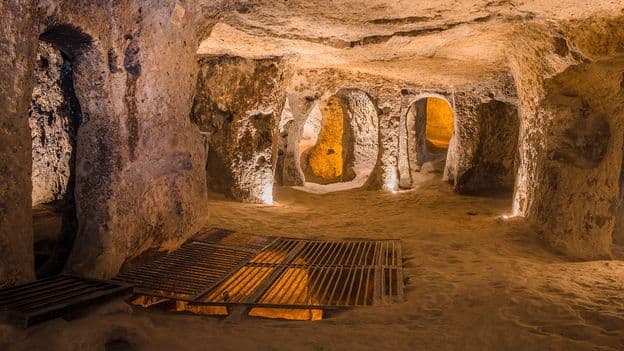
Centuries ago, inhabitants of Cappadocia, Turkey, found refuge in vast underground cities like Derinkuyu, sculpted by natural forces and human ingenuity. These subterranean havens maintained a consistent temperature of 15-17C (59-63F) year-round, offering respite from both extreme heat and cold.
Today, as climate change accelerates, these ancient structures are inspiring contemporary solutions. Turkey has already experienced significant warming, leading to more intense heatwaves, droughts, and increased flood risks. Experts like Francesco La Vigna from ISPRA are advocating for the repurposing of underground spaces as climate shelters, drawing parallels with Derinkuyu's design.
Cities like Rome and Helsinki are actively mapping and planning to utilize underground features, such as quarries, catacombs, and former defense structures, for climate resilience. While challenges like structural stability and ventilation require careful consideration, the potential for these hidden environments to protect populations from extreme weather is substantial.
While many of Cappadocia's cave dwellings are currently used for storage, their original purpose and current potential highlight a shift in perspective. Researchers emphasize the need to view underground spaces not as afterthoughts but as integral climate infrastructure, a concept pioneered by ancient civilizations.


