Home / Environment / Alps' White Gold Melts: Winter Sports Face Climate Crisis
Alps' White Gold Melts: Winter Sports Face Climate Crisis
15 Feb
Summary
- Alpine temperatures have risen significantly, impacting natural snowfall.
- Ski resorts increasingly rely on artificial snow, raising environmental concerns.
- Future Winter Games venues face uncertainty due to warming climate trends.
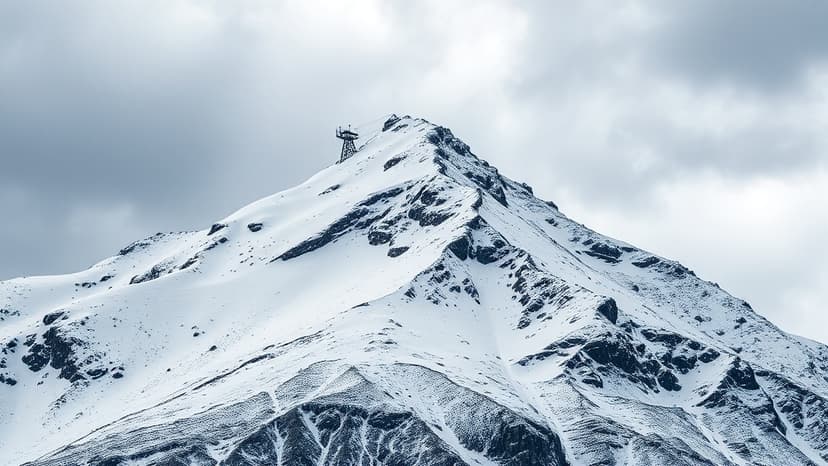
Alpine landscapes are undergoing visible transformations due to climate change, with rising temperatures significantly reducing natural snowfall. Michele Comi, a geologist from Chiesa in Valmalenco, observes the disappearance of winter snow, a stark contrast to his childhood. For instance, Cortina d'Ampezzo, a key Olympic venue, has experienced a 3.6°C increase in mean February temperatures since its last hosting of the Winter Games.
The ski industry is increasingly turning to artificial snowmaking to combat these changes, with 90% of Italian slopes relying on it. However, this method raises concerns about its substantial water and energy consumption, alongside negative impacts on biodiversity. Projections indicate a potential 40% decrease in days suitable for snowmaking in areas like Belluno province by mid-century.
Globally, the suitability of locations for hosting the Winter Games is being reassessed. A 2024 study found that while many locations could host in the 2050s, fewer could in the 2080s, especially for the Paralympics in March. Researchers emphasize that while climate change impacts winter tourism and the Olympics, it may not end them entirely, particularly with the integration of snowmaking technology.
The International Olympic Committee (IOC) is adapting its host-selection criteria to prioritize locations with reliable conditions by mid-century. While the future of winter sports will undoubtedly involve significant changes, with a guaranteed reduction in natural snow, proactive adaptation strategies offer a path forward, though the trend of warming cannot be reversed.