Home / Environment / Climate Change Fuels Deadly Southern Africa Floods
Climate Change Fuels Deadly Southern Africa Floods
29 Jan
Summary
- Torrential rains killed over 100, displacing 300,000.
- Region received a year's rain in just 10 days.
- Human-caused climate change significantly worsened the floods.
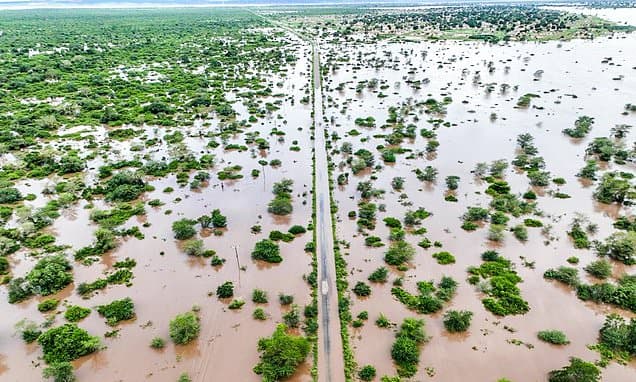
Torrential rains and severe flooding in southern Africa, which claimed over 100 lives and displaced over 300,000 people, have been significantly worsened by human-caused climate change. Researchers from the World Weather Attribution analyzed recent heavy rainfall across South Africa, Mozambique, and Zimbabwe.
This analysis revealed that the region endured a year's worth of rain in a mere 10-day period. The extreme weather caused extensive damage to housing and infrastructure, estimated to cost millions of dollars. Many homes in Mozambique were submerged, and roads and bridges were swept away in affected areas of South Africa and Zimbabwe.
Scientists utilized peer-reviewed methods to assess the influence of climate change on these severe weather patterns. Their findings indicated a distinct shift towards more intense downpours, a phenomenon occurring approximately once every 50 years. This intensity was further amplified by the La Niña weather pattern, which typically brings wetter conditions to the region, but was operating within a significantly warmer global atmosphere.
"Our analysis clearly shows that our continued burning of fossil fuels is not only increasing the intensity of extreme rainfall, but turning events that would have happened anyway into something much more severe," stated Izidine Pinto, a senior climate researcher. While exact quantification remains challenging, a 40% increase in rainfall intensity is strongly linked to human-induced climate change, transforming manageable rainfall into a severe deluge.
The researchers also emphasized the critical need for developing more advanced climate models specifically for Africa. Current models, largely developed outside the continent, may not fully capture the localized dynamics of climate change impacts in Africa's diverse regions. This lack of region-specific models hinders precise assessments of how climate change exacerbates events like these devastating floods.