feedzop-word-mark-logo
searchLogin
Feedzop
homeFor YouUnited StatesUnited States
You
bookmarksYour BookmarkshashtagYour Topics
Trending
Terms of UsePrivacy PolicyAboutJobsPartner With Us

© 2026 Advergame Technologies Pvt. Ltd. ("ATPL"). Gamezop ® & Quizzop ® are registered trademarks of ATPL.

Gamezop is a plug-and-play gaming platform that any app or website can integrate to bring casual gaming for its users. Gamezop also operates Quizzop, a quizzing platform, that digital products can add as a trivia section.

Over 5,000 products from more than 70 countries have integrated Gamezop and Quizzop. These include Amazon, Samsung Internet, Snap, Tata Play, AccuWeather, Paytm, Gulf News, and Branch.

Games and trivia increase user engagement significantly within all kinds of apps and websites, besides opening a new stream of advertising revenue. Gamezop and Quizzop take 30 minutes to integrate and can be used for free: both by the products integrating them and end users

Increase ad revenue and engagement on your app / website with games, quizzes, astrology, and cricket content. Visit: business.gamezop.com

Property Code: 5571

Home / Environment / Climate Change Fuels Deadly Southern Africa Floods

Climate Change Fuels Deadly Southern Africa Floods

29 Jan

Summary

  • Torrential rains killed over 100, displacing 300,000.
  • Region received a year's rain in just 10 days.
  • Human-caused climate change significantly worsened the floods.
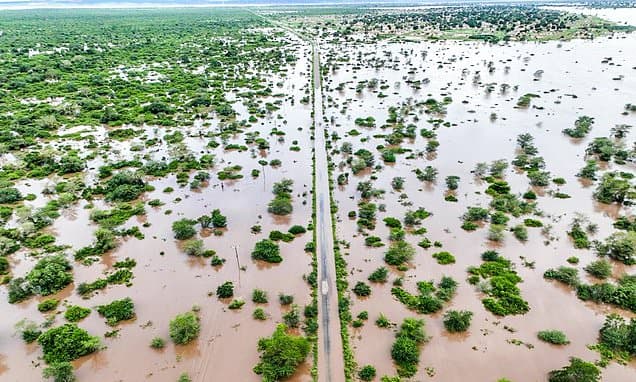
Climate Change Fuels Deadly Southern Africa Floods

Torrential rains and severe flooding in southern Africa, which claimed over 100 lives and displaced over 300,000 people, have been significantly worsened by human-caused climate change. Researchers from the World Weather Attribution analyzed recent heavy rainfall across South Africa, Mozambique, and Zimbabwe.

This analysis revealed that the region endured a year's worth of rain in a mere 10-day period. The extreme weather caused extensive damage to housing and infrastructure, estimated to cost millions of dollars. Many homes in Mozambique were submerged, and roads and bridges were swept away in affected areas of South Africa and Zimbabwe.

Scientists utilized peer-reviewed methods to assess the influence of climate change on these severe weather patterns. Their findings indicated a distinct shift towards more intense downpours, a phenomenon occurring approximately once every 50 years. This intensity was further amplified by the La Niña weather pattern, which typically brings wetter conditions to the region, but was operating within a significantly warmer global atmosphere.

"Our analysis clearly shows that our continued burning of fossil fuels is not only increasing the intensity of extreme rainfall, but turning events that would have happened anyway into something much more severe," stated Izidine Pinto, a senior climate researcher. While exact quantification remains challenging, a 40% increase in rainfall intensity is strongly linked to human-induced climate change, transforming manageable rainfall into a severe deluge.

The researchers also emphasized the critical need for developing more advanced climate models specifically for Africa. Current models, largely developed outside the continent, may not fully capture the localized dynamics of climate change impacts in Africa's diverse regions. This lack of region-specific models hinders precise assessments of how climate change exacerbates events like these devastating floods.

Disclaimer: This story has been auto-aggregated and auto-summarised by a computer program. This story has not been edited or created by the Feedzop team.
Human-caused climate change significantly worsened the torrential rains and floods, increasing the intensity of downpours and turning normally severe rain into a much more violent deluge.
The floods killed over 100 people, displaced more than 300,000, and caused widespread damage to housing and infrastructure, estimated in the millions of dollars.
Developing African climate models is crucial for accurately understanding the dynamics and extent of climate change impacts in the continent's various regions, as current global models may not fully capture these specifics.

Read more news on

Environmentside-arrowSouth Africaside-arrow
•
trending

Ohio snow emergency declared

trending

TikTok down in United States

trending

Andreeva matches Venus Williams' feat

trending

Warrington Hospital baby death

trending

Alexander Zverev advances in Australia

trending

Oilers host Capitals

trending

London celebrates Chinese New Year

trending

Liza Minnelli defends AI use

You may also like

Global Warming Makes Heatwaves 5x More Likely

22 Jan • 32 reads

article image

Climate Crisis Here: 2025 Shatters Heat Records

17 Jan • 116 reads

article image

2025 Shatters Heat Records: Global Temps Accelerate

7 Jan • 182 reads

article image

El Nino Looms: India's Monsoon and Summers in Peril?

3 Jan • 139 reads

article image

Melting Ice Fuels Volcanic Fury

1 Jan • 186 reads

article image