Home / Environment / Ancient Swannery Thrives Amidst Storms and Bird Flu
Ancient Swannery Thrives Amidst Storms and Bird Flu
5 Mar
Summary
- Abbotsbury Swannery dates back to the 11th century, managed by monks and now family descendants.
- Winter storms impacted the flock's natural food, requiring more frequent feeding by the swanherd.
- Many swans show immunity to bird flu, indicating a less virulent strain since 2008.
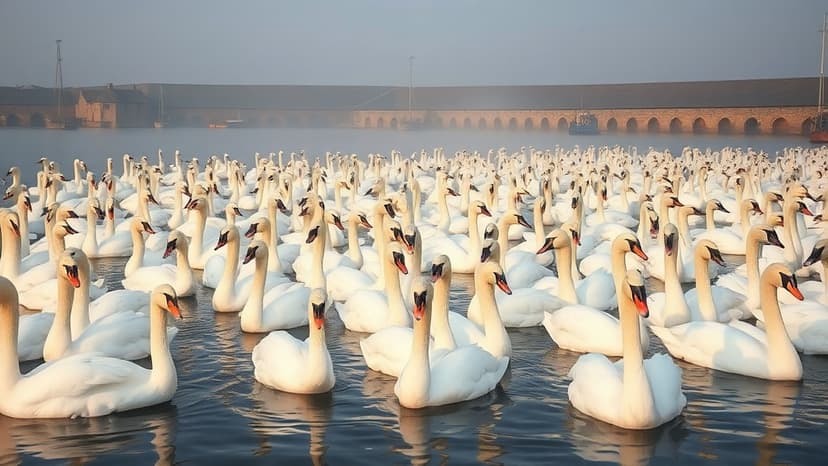
The historic Abbotsbury Swannery in Dorset, established in the 11th century by Benedictine monks, continues its centuries-old tradition of managing mute swans. Descendants of the Strangways family have overseen the flock for 15 generations. Approximately 600 swans reside year-round at the swannery, relying on daily feeding.
This past winter, frequent storm surges raised water levels in the Fleet lagoon, making natural eelgrass inaccessible. Swanherd Steve Groves consequently increased feeding frequency, providing wheat to the congregating birds. The swans, some walking and others flying in, eagerly accepted the food.
Evidence of recovery from bird flu is visible, with many swans exhibiting thickened necks, a sign of acquired immunity. While the strain of bird flu has become less virulent since its arrival in 2008, climate shifts also affect migratory patterns. Warmer weather discourages species like goldeneye duck and Bewick's swans from migrating to the UK. Conversely, cattle egrets, once rare, now regularly roost at the swannery.