feedzop-word-mark-logo
searchLogin
Feedzop
homeFor YouUnited StatesUnited States
You
bookmarksYour BookmarkshashtagYour Topics
Trending
trending

NFL playoff picture shaken up

trending

Dodgers sign Edwin Díaz

trending

Schwarber signs Phillies contract

trending

North Forsyth High stabbing

trending

Medline targets $55B valuation

trending

Angels acquire Vaughn Grissom

trending

Salah criticizes Liverpool, future uncertain

trending

Heat vs Magic NBA Cup

trending

Michigan routs Villanova, 89-61

Terms of UsePrivacy PolicyAboutJobsPartner With Us

© 2025 Advergame Technologies Pvt. Ltd. ("ATPL"). Gamezop ® & Quizzop ® are registered trademarks of ATPL.

Gamezop is a plug-and-play gaming platform that any app or website can integrate to bring casual gaming for its users. Gamezop also operates Quizzop, a quizzing platform, that digital products can add as a trivia section.

Over 5,000 products from more than 70 countries have integrated Gamezop and Quizzop. These include Amazon, Samsung Internet, Snap, Tata Play, AccuWeather, Paytm, Gulf News, and Branch.

Games and trivia increase user engagement significantly within all kinds of apps and websites, besides opening a new stream of advertising revenue. Gamezop and Quizzop take 30 minutes to integrate and can be used for free: both by the products integrating them and end users

Increase ad revenue and engagement on your app / website with games, quizzes, astrology, and cricket content. Visit: business.gamezop.com

Property Code: 5571

Home / Environment / 2025: Second Hottest Year Ever Recorded

2025: Second Hottest Year Ever Recorded

9 Dec

•

Summary

  • 2025 is projected to be the second-hottest year, following 2024's record.
  • Greenhouse gas emissions are identified as the primary cause of rising temperatures.
  • November 2025 experienced extreme weather, including cyclones and flooding.
2025: Second Hottest Year Ever Recorded

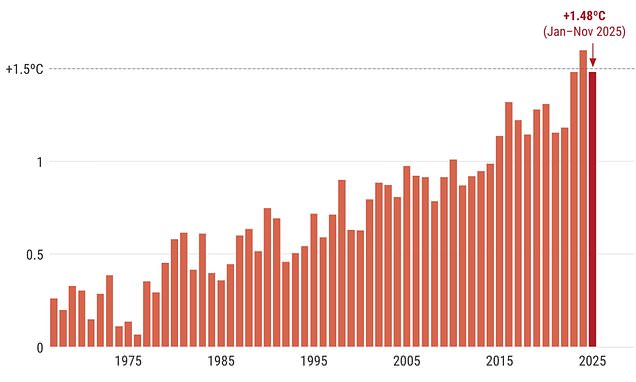
Global temperatures are set to confirm 2025 as the second-hottest year on record, trailing only 2024. Analysis by the Copernicus Climate Change Service reveals average temperatures for the first 11 months of 2025 are 1.48°C above pre-industrial levels, matching 2023's full-year anomaly. This trend highlights the urgent need to curb greenhouse gas emissions, which experts identify as the root cause.

This past November was the third-warmest on record, experiencing an average temperature 0.65°C above the 1991-2020 average. The month was also marked by severe weather, including tropical cyclones in Southeast Asia that led to catastrophic flooding. Scientists are increasingly linking such extreme events to ongoing global warming, emphasizing the tangible impacts of climate change.

The warming trend extends to ocean surface temperatures, with November 2025 sea surface temperatures ranking fourth highest globally. Arctic sea ice coverage was also significantly below average, suggesting persistently higher autumn temperatures. These combined indicators underscore a global climate in rapid transition, with profound implications for ecosystems and human societies worldwide.


Disclaimer: This story has been auto-aggregated and auto-summarised by a computer program. This story has not been edited or created by the Feedzop team.
The Copernicus Climate Change Service predicts 2025 will be the second-hottest year on record, tied with or just behind 2024.
Human-caused greenhouse gas emissions are identified as the primary driver of the observed rising global temperatures.
November 2025 saw extreme weather, including tropical cyclones in Southeast Asia causing widespread flooding and loss of life.

Read more news on

Environmentside-arrowSoutheast Asiaside-arrow

You may also like

Asia Floods Rage: Over 1,200 Dead, 1 Million Evacuated

3 Dec • 214 reads

article image

UK Faces Climate Emergency: Scientists Warn of Catastrophe

27 Nov • 86 reads

article image

New EU Service Tracks Climate's Extreme Weather Role

20 Nov • 86 reads

Turkey to Host UN Climate Summit COP31

20 Nov • 113 reads

article image

Climate Talk: Words Matter, Action Lags

20 Nov • 31 reads

article image