Home / Environment / 190-Year-Old Specimen Solves Pangolin Mystery
190-Year-Old Specimen Solves Pangolin Mystery
27 Jul
Summary
- Historic specimen DNA confirmed distinct Himalayan pangolin species.
- 1836 specimen's DNA settled taxonomic debate; name 'Manis aurita' restored.
- Discovery aids conservation by clarifying species ranges and anti-poaching.
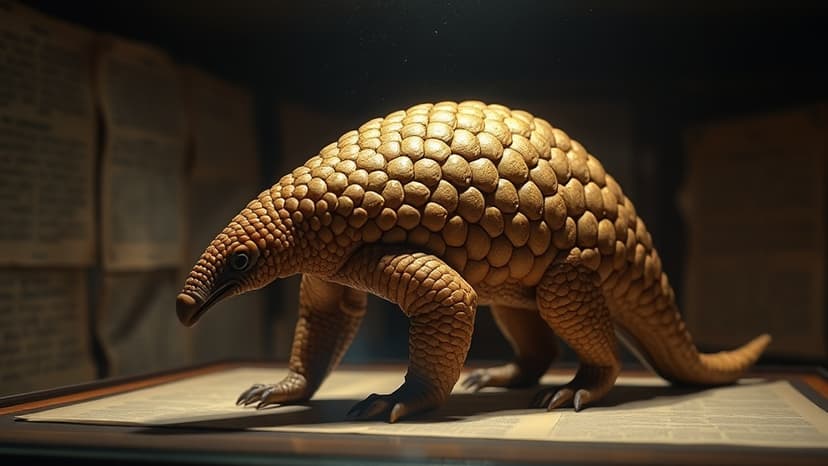
A pangolin specimen, collected in 1836 and preserved in London, has definitively confirmed the existence of a separate pangolin species in Nepal and northern India. Researchers utilized DNA extracted from this nearly 190-year-old specimen to resolve a long-standing scientific debate. The findings establish the animal as Manis aurita, a name first proposed centuries ago.
This breakthrough relied on genetic sequencing from the historic type specimen, originally gathered by Brian Houghton Hodgson in Nepal. Comparisons with genetic material from contemporary pangolins in the region confirmed their shared lineage. This classification supersedes a more recent proposal for a different species name.
Beyond DNA, scientists conducted detailed physical examinations of museum specimens, comparing features like skull measurements, ear shape, and scale patterns. The Himalayan pangolin exhibits subtle distinctions from the Chinese pangolin, including a larger size and smaller ears, reflecting the 'aurita' designation. Genomic analysis indicates these lineages diverged approximately 1.8 million years ago.
The correct classification of pangolins is vital for combating illegal trafficking, as they are the world's most heavily trafficked mammals. Traffickers and law enforcement often deal with pangolin scales, making accurate species identification challenging. The confirmed distinct species status provides clearer geographic ranges, improving reintroduction efforts and enabling targeted anti-poaching enforcement by tracing seized scales to their origin.


