Home / Disasters and Accidents / Himalayan Permafrost Thaw Triggers Devastating Landslides
Himalayan Permafrost Thaw Triggers Devastating Landslides
28 Aug
Summary
- Glacial and bedrock collapses likely caused by thawing permafrost.
- Warming planet destabilizes Himalayan permafrost, increasing landslide risks.
- Early warning systems ill-equipped for rapid flash flooding events.
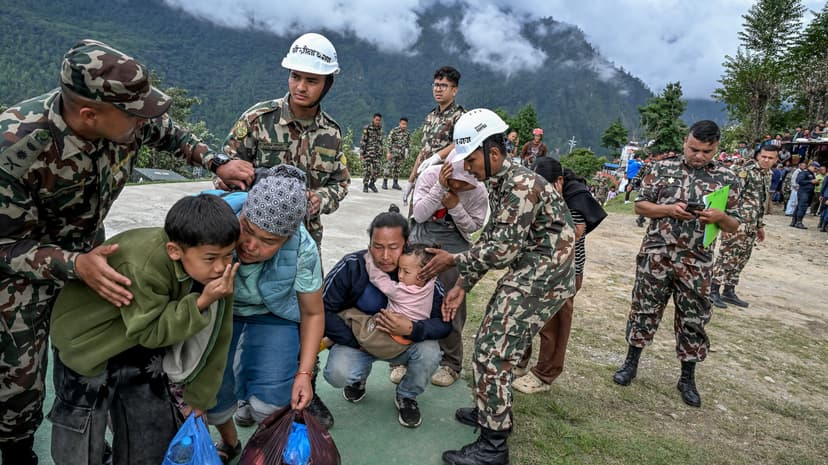
Glaciologists and geologists suggest that a massive bedrock collapse under a glacier, followed by an ice chunk detaching, likely caused recent devastating flooding in the Himalayas. The region's permafrost, a frozen mix of soil and rock, is thawing due to global warming from burning fossil fuels. This destabilizes the ground beneath glaciers, elevating risks of landslides and collapses. Such glacial failures have occurred dozens of times in the China-Nepal border region since 1900.
Scientists note that thawing permafrost weakens the 'cryospheric glue' holding rock and ice together. The recent event occurred on Langtang Lirung in northern Nepal, sending millions of tons of rock and ice down the mountain. While climate change is a significant factor, experts caution it's not the sole immediate cause, with other factors like snowmelt potentially contributing. Researchers are still analyzing extensive data.
Thawing permafrost presents a newer risk to Nepalese communities, who have historically focused on glacial lake outburst floods (GLOFs). GLOFs occur when avalanches or earthquakes destabilize glacial lakes, causing catastrophic floods. However, initial data suggests the recent event was not caused by an overflowing glacial lake. Current early warning systems are ill-equipped to detect the speed of this type of flash flooding.


