Home / Disasters and Accidents / Cockpit Monitors Bill Fails by One Vote
Cockpit Monitors Bill Fails by One Vote
28 Feb
Summary
- Bipartisan bill mandating cockpit displays failed in the House.
- Advocates say GOP counter-bill lacks essential monitoring systems.
- Aviation safety expert cites 40-second reaction time difference.
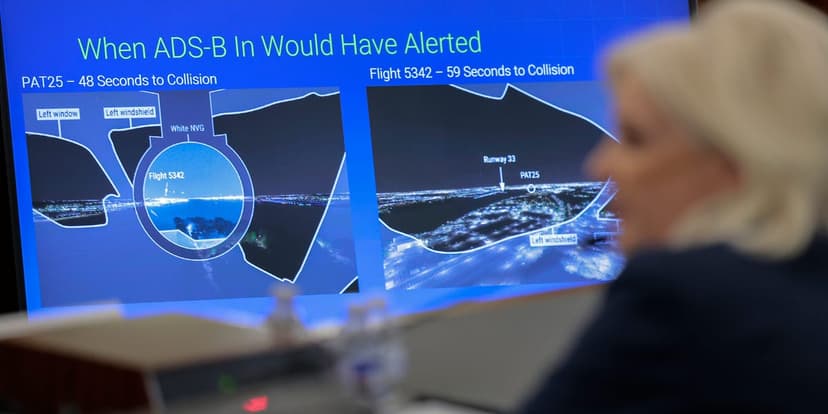
A bipartisan bill, the ROTOR Act, designed to equip commercial aircraft with real-time air traffic displays, failed in the House by a single vote. The bill, which had bipartisan support in the Senate and backing from various aviation groups, aimed to improve pilot situational awareness. Advocates argue that a Republican counter-proposal, the ALERT Act, is insufficient because it does not mandate cockpit monitors.
Supporters contend that the ROTOR Act, which included provisions for some military aircraft, would have provided pilots with crucial extra reaction time. Aviation safety expert Kivanc Avrenli noted that ADS-B In technology could have given pilots an additional 59 seconds to react in a recent collision scenario. This contrasts with the 19 seconds of alert received before the January 2025 crash near Ronald Reagan National Airport.
The ALERT Act, supported by some House Republicans, relies primarily on air traffic controllers for collision alerts and allows certain military flights to opt out of transmitting their positions. The Pentagon cited national defense concerns for its shift in position. The National Transportation Safety Board has recommended ADS-B In technology since 2008, noting that some airlines have voluntarily implemented it.