

Home / Disasters and Accidents / Pilots Vulnerable? Watchdog Slams FAA on 737 Max Safety
Pilots Vulnerable? Watchdog Slams FAA on 737 Max Safety
28 Apr
Summary
- FAA failed to address engine smoke risks on Boeing 737 Max.
- A government watchdog found FAA ignored safety concerns raised internally.
- Pilots may remain vulnerable to engine smoke issues without FAA action.
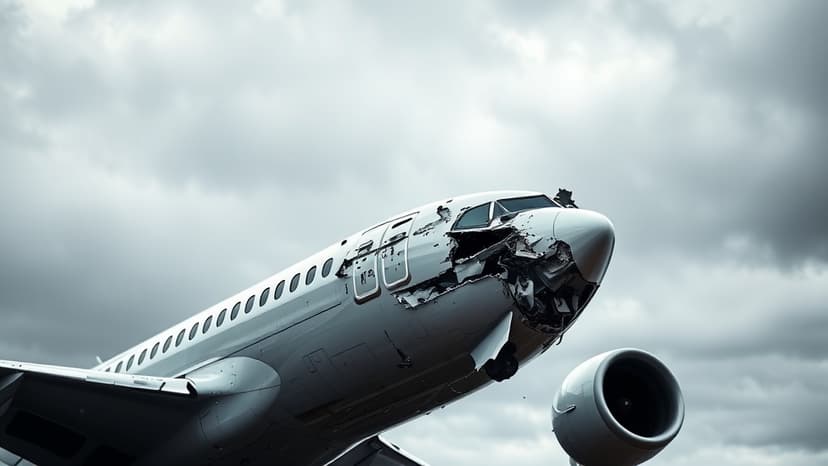
A government watchdog has urged the Federal Aviation Administration (FAA) to enhance its response to safety risks stemming from an engine feature on Boeing's 737 Max, which has twice led to smoke-filled planes. The load reduction device (LRD) on the LEAP-1B engine, designed to protect against damage, instead released engine oil causing smoke in two separate incidents in 2023.
An investigation by the U.S. Department of Transportation's inspector general revealed internal disagreements within the FAA regarding the takeoff procedures and necessary fixes. While some investigators recommended procedure changes, the final decision-making board opted to require software updates from Boeing and CFM International without altering takeoff protocols.
The inspector general's report highlighted that the FAA's risk assessment process relied too heavily on human judgment and may not have been conservative enough. Recommendations include notifying pilots of LRD risks and ensuring adequate simulator training for smoke events, as current simulators did not sufficiently incorporate these scenarios.
Boeing and CFM International are developing a software fix to detect LRD activation and limit harmful air flow, with installation on affected planes expected by mid-2028. The FAA has agreed with the inspector general's recommendations and plans to address them in the coming months, aiming to prevent future risks to the traveling public.
