feedzop-word-mark-logo
searchLogin
Feedzop
homeFor YouUnited StatesUnited States
You
bookmarksYour BookmarkshashtagYour Topics
Trending
Terms of UsePrivacy PolicyAboutJobsPartner With Us

© 2026 Advergame Technologies Pvt. Ltd. ("ATPL"). Gamezop ® & Quizzop ® are registered trademarks of ATPL.

Gamezop is a plug-and-play gaming platform that any app or website can integrate to bring casual gaming for its users. Gamezop also operates Quizzop, a quizzing platform, that digital products can add as a trivia section.

Over 5,000 products from more than 70 countries have integrated Gamezop and Quizzop. These include Amazon, Samsung Internet, Snap, Tata Play, AccuWeather, Paytm, Gulf News, and Branch.

Games and trivia increase user engagement significantly within all kinds of apps and websites, besides opening a new stream of advertising revenue. Gamezop and Quizzop take 30 minutes to integrate and can be used for free: both by the products integrating them and end users

Increase ad revenue and engagement on your app / website with games, quizzes, astrology, and cricket content. Visit: business.gamezop.com

Property Code: 5571

Home / Disasters and Accidents / Contrails Not Accelerants: Fire Truth Revealed

Contrails Not Accelerants: Fire Truth Revealed

30 Jan

•

Summary

  • Local authorities link fires to dry landscape and climate change.
  • Social media claims about aerosol deployment programs are false.
  • Aircraft condensation trails are mistaken for fire accelerants.
Contrails Not Accelerants: Fire Truth Revealed

Intense bushfires that swept through southeastern Australia in early January were caused by a combination of factors including a dry landscape, extreme weather conditions, and climate change. Local authorities have actively refuted claims circulating on social media that attributed the fires to "relentless aerosol deployment programs" or "chemtrails."

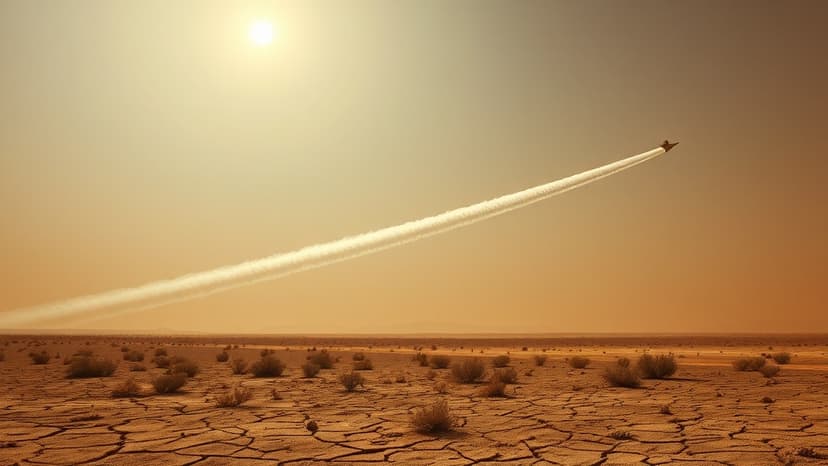
Footage showing white trails behind aircraft, shared widely on social media, has been identified by experts as normal condensation trails, or contrails. An atmospheric chemist from the University of Melbourne explained that these trails are more visible on dry days, which are also conducive to fires. Authorities confirmed that the fires, including one in Gippsland, Victoria, were ignited by lightning and exacerbated by these environmental factors.

These debunked theories suggested that these purported aerosols acted as fire accelerants, making the fires burn faster and hotter than ever before. However, emergency services and scientific experts have stated there is no basis for such claims, emphasizing that regular flight activities and natural weather patterns are responsible for the observed phenomena.

trending

Ohio snow emergency declared

trending

TikTok down in United States

trending

Andreeva matches Venus Williams' feat

trending

Warrington Hospital baby death

trending

Alexander Zverev advances in Australia

trending

Oilers host Capitals

trending

London celebrates Chinese New Year

trending

Liza Minnelli defends AI use

Disclaimer: This story has been auto-aggregated and auto-summarised by a computer program. This story has not been edited or created by the Feedzop team.
Local authorities stated that factors such as the dry landscape, elevated fire weather conditions, and climate change contributed to the intense fires.
No, experts have debunked this claim, explaining that the white trails are condensation trails (contrails) from aircraft and are not fire accelerants.
Authorities and atmospheric chemists have refuted claims that "chemtrails" or "aerosol deployments" caused or worsened the fires, attributing the phenomena to normal aircraft contrails and natural environmental factors.

Read more news on

Disasters and Accidentsside-arrowAustraliaside-arrow

You may also like

Australia Reels: 50°C Heat Sparks Wildfires

2 hours ago • 3 reads

article image

Australia Swelters: Climate Crisis Fuels Extreme Heat

27 Jan • 13 reads

article image

Flash Flood Sweeps Cars into Sea in Victoria

16 Jan • 83 reads

article image

Tuvalu Families Find New Home in Australia

9 Jan • 134 reads

article image

Australia's Forests Dying Faster as Climate Warms

6 Jan • 147 reads

article image