Home / Business and Economy / EVs: West's Retreat Hands China Auto Dominance
EVs: West's Retreat Hands China Auto Dominance
21 Mar
Summary
- Western carmakers risk repeating 1980s Detroit's costly error by abandoning EVs.
- Chinese EV brands like BYD are rapidly gaining market share in Europe.
- Iran war impact and soaring oil prices boost interest in electric cars.
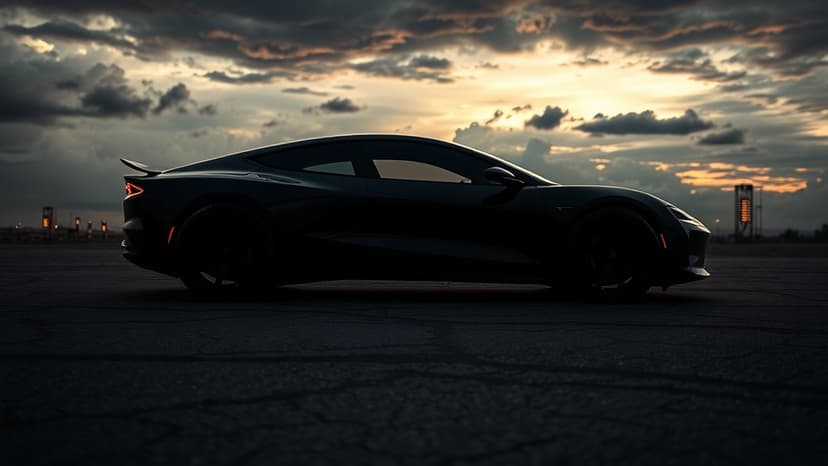
Western car manufacturers are making a profound strategic mistake by pulling back from electric vehicle (EV) development and prioritizing combustion engines, echoing the 1980s decline of Detroit's auto industry. Chinese brands such as BYD, which has become the world's largest EV seller, are rapidly gaining significant market share in Europe. Experts caution that this hesitation could hand rivals a structural advantage that may become irreversible.
The impact of the Iran conflict and surging oil prices has paradoxically increased consumer interest in EVs, with online traffic for EV-related searches jumping by 40% in Germany. However, Western manufacturers have recently written down tens of billions in expected EV returns due to lower profitability compared to petrol cars. Companies like Stellantis and Volkswagen have made substantial financial adjustments, while Ford in the US has also faced significant hits, leading to cancelled EV models.
Some executives suggest this short-term profit focus, benefiting CEOs with short tenure, is a flawed strategy for long-term market survival. Meanwhile, China is accelerating its EV advancements, with BYD unveiling a new battery offering a 600-mile range and rapid charging capabilities. Politicians in Europe are divided, with the EU having relaxed a 2035 ban on new petrol cars, creating policy uncertainty that industry leaders argue hinders decisive investment.
Experts contend that blaming politicians is a scapegoat; carmakers are losing the technological race with China. A key issue is Western manufacturers' historical reliance on outsourced battery production, unlike Chinese competitors who control their entire supply chain, from mining lithium to building chips. This lack of vertical integration and focus on multiple power sources is costly and inefficient, with a shrinking window of opportunity to compete effectively against China's rapid progress.