Home / Business and Economy / US Power Grid Strains Under Demand, Costs Soar
US Power Grid Strains Under Demand, Costs Soar
20 Jul
Summary
- Transmission congestion cost $1.8 billion over two recent months.
- Demand growth is accelerating due to data centers and manufacturing.
- New transmission lines take over a decade to permit and construct.
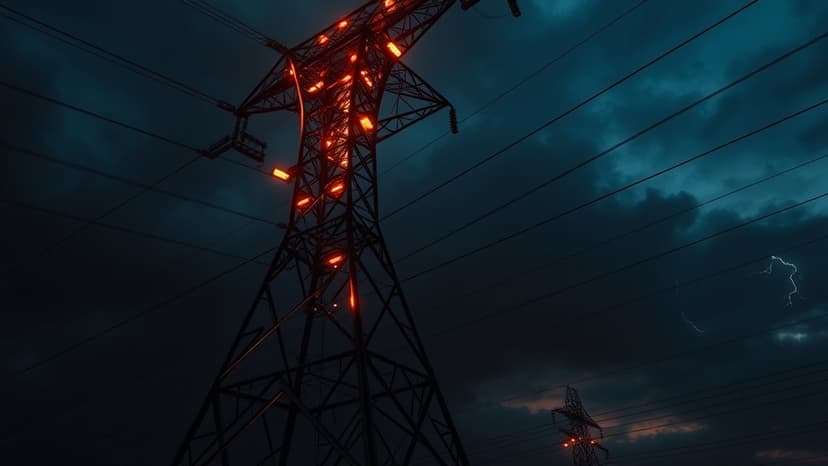
Congestion on the U.S. electricity grid is emerging as a significant and costly bottleneck, impacting power prices and the reliability of electricity supply. In a recent two-month period, transmission congestion alone cost market participants approximately $1.8 billion. This issue functions similarly to a tax, increasing costs for consumers as grid operators are forced to use more expensive local power generation when cheaper options are unavailable due to transmission line overload.
The problem is intensifying as U.S. electricity demand accelerates, driven by surging data center construction, expanded domestic manufacturing, and the ongoing electrification of transportation and heating. This increased demand requires more power transmission, precisely when developing new infrastructure is notoriously slow. New high-voltage power lines can take a decade or more to permit and build, facing local opposition and regulatory hurdles.
This dynamic is particularly visible in regions like PJM, which covers 13 states. Congestion costs in June were concentrated in areas like Pennsylvania, Maryland, and Northern Virginia, a hub for data centers. While technological solutions like Dynamic Line Rating aim to optimize existing infrastructure, they are unlikely to fully resolve the underlying challenge. The U.S. faces a critical juncture where its growing energy ambitions are outpacing the expansion of its transmission network.


