Home / Business and Economy / LNG Exports Outpace Homes, Businesses in U.S. Gas Demand
LNG Exports Outpace Homes, Businesses in U.S. Gas Demand
18 Feb
Summary
- LNG exporters consumed record gas, exceeding households and commercial sites.
- This surge correlates with a 61% rise in U.S. natural gas prices in 2025.
- Anticipated export capacity doubling may further tighten supplies and raise costs.
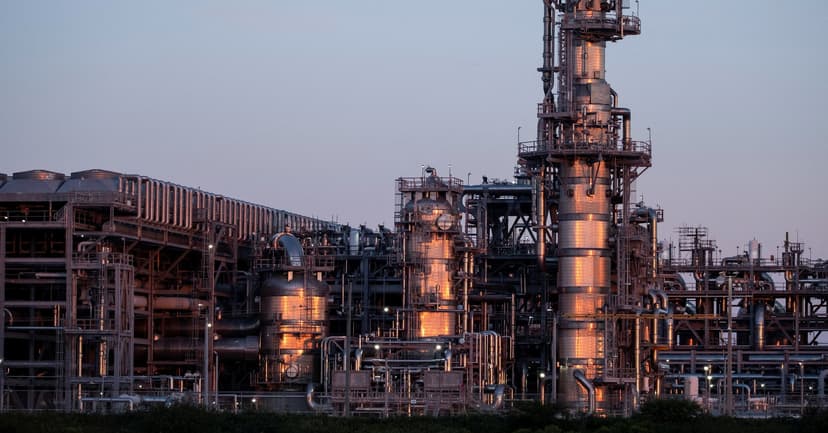
In the first 11 months of 2025, U.S. liquefied natural gas (LNG) exporters consumed a record 5,000 billion cubic feet of natural gas, exceeding the consumption of both residential and commercial sectors. This unprecedented demand has placed LNG exporters as the third-largest gas consumer in the United States, behind industry and power firms.
The dramatic increase in LNG exports, a 25% rise compared to the same period in 2024, has been accompanied by a significant 61% jump in the benchmark U.S. natural gas price. As natural gas powers approximately 40% of U.S. electricity, these higher costs have directly translated into record-high electricity bills for consumers.
This escalation in energy expenses, occurring alongside already high costs for insurance, housing, food, and medical care, is poised to become a significant electoral issue. The growing demand from LNG exporters, who compete with households and power generation for gas, may attract considerable public and political attention.
Historically, LNG exporter demand has surged by 209% from January to November of 2025 compared to 2019, far outpacing the 3% average growth seen by other consumer groups. This rapid expansion has fundamentally altered domestic gas market dynamics, leading to tighter supplies and increased price volatility.
In response to rising costs, consumers and businesses are exploring alternative energy sources. Households and commercial entities are increasingly opting for electrification, while power firms are boosting output from renewable sources and cheaper coal-fired plants. Despite these shifts, the demand from LNG exports continues to grow.
LNG exporters are well-positioned to absorb higher domestic gas costs, as international sale prices for LNG are substantially higher than U.S. domestic prices. In 2025, the average U.S. LNG export sale price was approximately $7.87 per thousand cubic feet (MCF), compared to the Henry Hub spot price of $3.66 per MCF.
This favorable pricing allows exporters to cover liquefaction and shipping fees, generating significant profits and spurring rapid expansion plans. Total North American LNG export capacity is projected to more than double from 11.4 BCF in 2024 to 24.3 BCF by the end of 2027.
Such a substantial increase in export capacity, if realized, will likely intensify competition for natural gas, potentially driving costs even higher for households, commercial users, and power generation. Residences already face the highest gas costs, averaging around $19 per MCF in 2025, with commercial and industrial users also paying considerably more than power firms.
Given the broad impact of rising gas costs across all major consumer groups, LNG exporters may face intense scrutiny in 2026 and potential pressure to moderate their expansion plans, even if it means slower sales and a diminished role in U.S. energy export dominance.