feedzop-word-mark-logo
searchLogin
Feedzop
homeFor YouUnited StatesUnited States
You
bookmarksYour BookmarkshashtagYour Topics
Trending
Terms of UsePrivacy PolicyAboutJobsPartner With Us

© 2026 Advergame Technologies Pvt. Ltd. ("ATPL"). Gamezop ® & Quizzop ® are registered trademarks of ATPL.

Gamezop is a plug-and-play gaming platform that any app or website can integrate to bring casual gaming for its users. Gamezop also operates Quizzop, a quizzing platform, that digital products can add as a trivia section.

Over 5,000 products from more than 70 countries have integrated Gamezop and Quizzop. These include Amazon, Samsung Internet, Snap, Tata Play, AccuWeather, Paytm, Gulf News, and Branch.

Games and trivia increase user engagement significantly within all kinds of apps and websites, besides opening a new stream of advertising revenue. Gamezop and Quizzop take 30 minutes to integrate and can be used for free: both by the products integrating them and end users

Increase ad revenue and engagement on your app / website with games, quizzes, astrology, and cricket content. Visit: business.gamezop.com

Property Code: 5571

Home / Business and Economy / Debt Overload: Fed's Brakes Fail as US Eyes Inflation Spiral

Debt Overload: Fed's Brakes Fail as US Eyes Inflation Spiral

6 Jan

•

Summary

  • US faces 'fiscal dominance' where debt constrains central bank's inflation fight.
  • The 'Hamilton Norm' of repaying debt died in 2020, increasing permanent debt.
  • High US debt makes interest payments an expansionary force, unlike past crises.
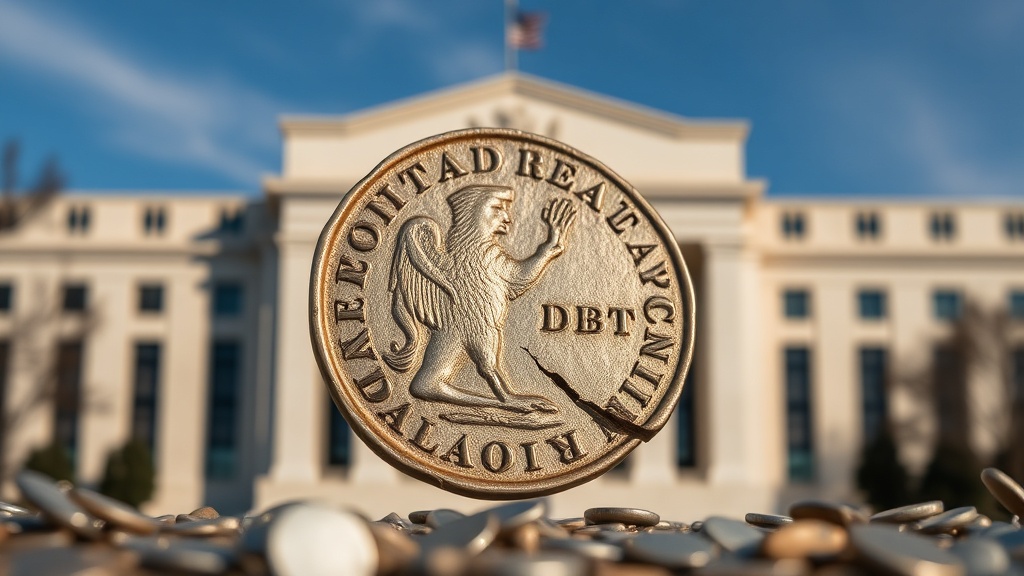
Debt Overload: Fed's Brakes Fail as US Eyes Inflation Spiral

As the U.S. stares down a debt-to-GDP ratio of 120% in early 2026, economists warn of an impending 'fiscal dominance.' This economic peril, likened to ancient Rome's currency debasement, occurs when government financing needs cripple the central bank's inflation control efforts, forcing adjustments through reduced purchasing power rather than fiscal discipline.

The foundational 'Hamilton Norm,' which presumed debt issuance would be offset by future tax surpluses, is considered defunct since 2020. This shift means government debt is now viewed as a "gift" rather than a loan, eroding the Federal Reserve's ability to manage inflation. Consequently, the massive interest payments on the national debt, exceeding $1 trillion annually, now act as an expansionary force.

trending

Salt Lake City funeral shooting

trending

Roblox mandates age verification

trending

Warriors beat Bucks at home

trending

Amazon Prime settlement refunds

trending

Elle Simone Scott dies at 49

trending

Raptors beat Hornets at buzzer

trending

Hawks might trade Trae Young

trending

Gilgeous-Alexander questionable versus Jazz

trending

Magic beat Nets at buzzer

This scenario contrasts sharply with past economic challenges. Unlike previous eras, where raising interest rates contracted the economy, today's enormous debt load makes such actions counterproductive. High interest payments inject cash into the private sector, accelerating inflation. Observers note that the bond market is already signaling distress, with potential for increased borrowing costs for consumers, independent of Federal Reserve decisions.

Disclaimer: This story has been auto-aggregated and auto-summarised by a computer program. This story has not been edited or created by the Feedzop team.
Fiscal dominance is when government debt levels constrain the Federal Reserve's ability to fight inflation, leading to price increases rather than fiscal adjustments.
Experts believe the 'Hamilton Norm,' the expectation of debt repayment via future surpluses, ended in 2020 due to stimulus packages viewed as gifts, not loans.
High US national debt makes interest payments a direct economic stimulus, paradoxically making rate hikes counterproductive for inflation control.

Read more news on

Business and Economyside-arrowFederal Reserveside-arrow

You may also like

Cyclical Stocks Set to Lead US Market Rally

23 Dec, 2025 • 106 reads

article image

US Economy Surges: GDP Hits 4.3% Growth!

23 Dec, 2025 • 123 reads

article image

Powell Hints at More Rate Cuts Amid Labor Cooling

12 Dec, 2025 • 172 reads

article image

US Fed Rate Decision to Drive Indian Markets

7 Dec, 2025 • 182 reads

article image

US Economy: Mixed Signals Stir Market Uncertainty

4 Dec, 2025 • 195 reads

article image