Home / Business and Economy / Economic Anxiety Spreads Across All Classes
Economic Anxiety Spreads Across All Classes
20 Jun
Summary
- Upper-class Americans express significant financial concerns.
- Pessimism about children's future has sharply increased.
- Many feel the economic system is unfairly stacked against them.
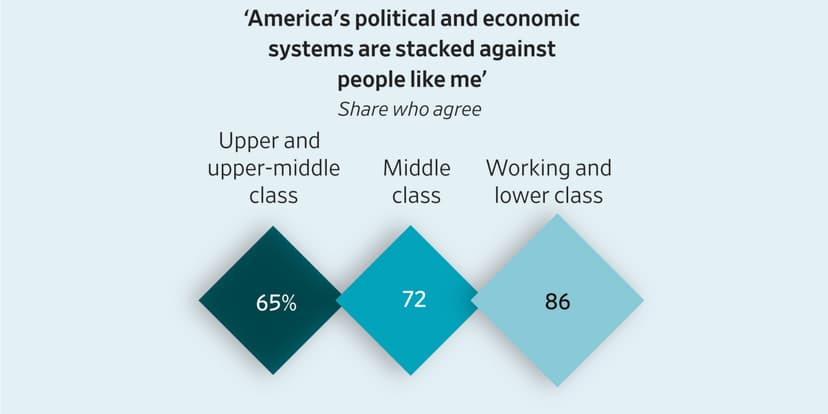
Economic anxiety is increasingly affecting wealthier Americans, according to a recent Wall Street Journal poll. A significant portion of those identifying as upper or upper-middle class express concerns about retirement savings and current financial security. This sentiment is particularly striking given that these groups often have household incomes of $150,000 or more.
Furthermore, there's a palpable decline in optimism for future generations. A vast majority of the most affluent respondents lack confidence that their children's lives will be better than their own. This pessimism has intensified considerably since 2019, mirroring the views of less privileged groups and indicating a broad societal unease.
Concerns about the fairness of the economic system are also widespread. A majority of the wealthiest respondents believe the nation's political and economic systems are "stacked against people like me." This sentiment has more than doubled since 2017, highlighting a growing distrust in established structures across various economic strata.
While middle and working-class Americans signal the most financial strain, the escalating pessimism among the upper classes is notable. This widespread anxiety persists despite a robust economy, with factors like rising gasoline prices, inflation above the Federal Reserve's target, and concerns about artificial intelligence contributing to the unease.


