Home / Business and Economy / Trans Mountain Pipeline Boosts Capacity Amidst Tight Export Market
Trans Mountain Pipeline Boosts Capacity Amidst Tight Export Market
18 Mar
Summary
- Pipeline expansion will add 90,000 barrels daily by early 2027.
- A dredging project may boost tanker capacity by 30% in mid-2027.
- Canadian oil producers faced huge discounts due to pipeline shortages.
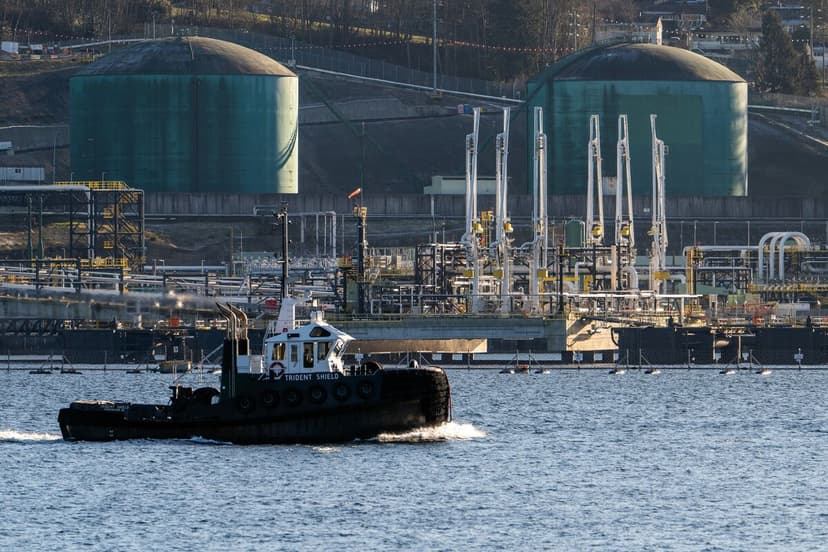
Trans Mountain Corporation is set to significantly enhance its pipeline capacity, with initial expansions adding 90,000 barrels per day to its main line by the first quarter of 2027. These upgrades are timed as export space from western Canada is anticipated to tighten. A critical project involving dredging under the Second Narrows Bridge is slated for a final investment decision this summer, with construction beginning in the fall. This effort is expected to raise the amount of oil shipped per tanker by 30%, beginning as early as the second quarter of 2027.
Further expansions are planned, including the addition of pump stations and pipe replacements by 2029, which will increase overall capacity. An additional project by 2029 will also boost capacity on a line to Washington state. Despite the high construction costs, these expansions are vital for Canadian oil sands producers, enabling them to access Asian markets and reducing reliance on the US. This improved access is particularly valuable given current global geopolitical events.
Canadian oil producers have historically struggled with insufficient export pipeline capacity, leading to significant discounts compared to global benchmarks. By summer of 2026, export volumes are expected to exceed pipeline space, highlighting the urgency of these expansions. In the past year, Trans Mountain returned C$1.7 billion to the Canadian government. Recent operational adjustments, including a temporary closure due to bridge issues in February, have caused minor shifts in shipping schedules.