Home / Business and Economy / Texas Drones Offer High-Tech Solution to Ranch Brush Encroachment
Texas Drones Offer High-Tech Solution to Ranch Brush Encroachment
18 Mar
Summary
- Drones provide precise herbicide application in dense brush.
- Agricultural drones overcome terrain limitations of traditional methods.
- Drone technology boosts efficiency and profitability for ranchers.
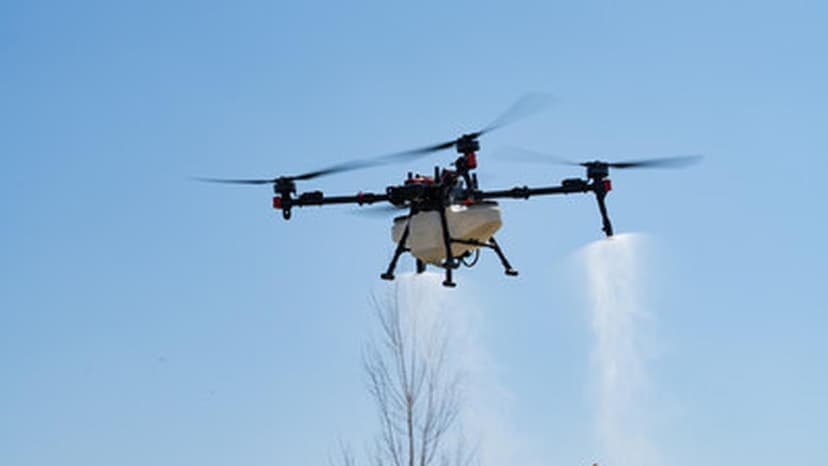
With the U.S. cattle herd at a 75-year low and beef prices soaring, Texas ranchers are facing immense pressure to preserve usable pastureland from encroaching invasive brush. Conventional brush removal techniques often prove too expensive, imprecise, or unsuitable for difficult terrain. Agricultural drones are emerging as a practical solution, enabling targeted herbicide application in dense thickets and remote areas, crucially without harming the soil or grass beneath.
Curtis Schramm, owner of Texas Agridrone Services, highlights the challenges in regions like Gonzales County, where brush encroachment significantly reduces available pasture. He notes that traditional methods like ground rigs are impractical for smaller acreages, helicopters lack precision, and mechanical shredding can worsen the problem by stimulating regrowth. Schramm's chosen drone, the XAG P150, utilizes a quad-rotor design and a specialized spray system to deliver herbicide uniformly through dense canopies. Its 4D imaging radar and real-time 3D terrain mapping allow for autonomous flight, adapting to uneven landscapes and ensuring safe operation. This technology enables Schramm to manage operations solo, reducing overhead and increasing profitability.
Schramm's efforts have yielded significant results, with his drone treatments effectively eliminating invasive brush while preserving grass. In his first season, from August to December 2025, he treated 682 acres, leading to recovered pasture that supports more cattle weight and income for ranchers. His dedication to efficiency, with refill cycles under 32 seconds, underscores the vital role this technology plays in supporting land, cattle, and family livelihoods, reflecting a deep-seated connection to agriculture and conservation.