

Home / Business and Economy / Tesla Q1 Earnings Beat: Stock Surges Amidst Challenges
Tesla Q1 Earnings Beat: Stock Surges Amidst Challenges
22 Apr
Summary
- Tesla's Q1 earnings surpassed expectations, boosting investor confidence.
- Despite beating earnings, Tesla reported slightly lower revenue and missed vehicle delivery targets.
- Strong free cash flow was reported, contrary to expectations of a loss.
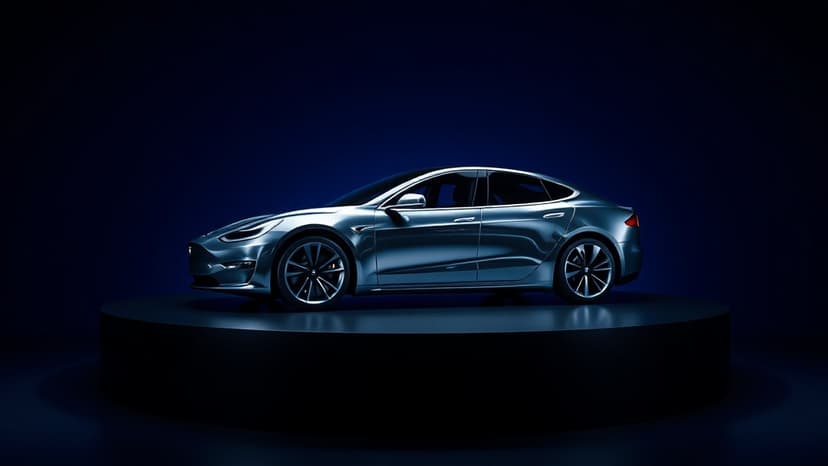
Tesla's stock experienced a notable surge of approximately 4.5%-5% following the release of its Q1 2026 earnings report, which exceeded market expectations. The company announced adjusted earnings per share of 41 cents, surpassing the anticipated 34 cents and marking the second consecutive quarter of beating analyst forecasts. This positive financial performance provided a degree of relief to investors, even as Tesla navigates slower sales and increasing global competition.
While Tesla's Q1 revenue reached $22.39 billion, it fell slightly short of the $22.6 billion expected. Vehicle deliveries were also below projections, with 358,023 units delivered against an expectation of 365,645. The company produced 408,386 vehicles, resulting in an inventory of over 50,000 unsold cars, the largest surplus in at least four years. Nevertheless, deliveries did show a year-over-year growth of 6.3%.
A significant surprise in the report was Tesla's free cash flow of $1.44 billion, a strong positive figure compared to an expected loss of $1.43 billion. This indicates that the company has not yet commenced its substantial planned expenditures. CEO Elon Musk intends to invest heavily in AI, robotics, and manufacturing, with plans to spend at least $20 billion in 2026, more than double the previous year's investment. Tesla has also joined the Terafab chip-making project with other major tech firms, though analysts caution these investments could lead to negative cash flow in 2026.
Future growth strategies for Tesla include developing a cheaper electric SUV, though this is still in early stages and not slated for imminent release. The company is placing a strong emphasis on self-driving technology and robotaxis, having launched services in cities like Dallas and Houston, with plans to expand to seven cities. European regulators are currently evaluating Tesla's Full Self-Driving software for broader approval.
The company's energy storage business continues to perform well with high demand. Despite the recent stock increase, Tesla shares remain approximately 20% below their December highs. Analysts project Tesla will deliver 1.67 million vehicles in 2026, representing a modest growth of about 2.4%. Tesla reported a profit of $477 million for the quarter, an increase from $409 million last year, though still significantly lower than the over $3 billion achieved in 2022, signaling a long-term profit decline.
Tesla's current valuation of around $1.2 trillion relies heavily on future AI advancements. The company has produced its first Cybercab, a self-driving car prototype, in Texas. Tesla is currently offering paid robotaxi rides using Model Y vehicles in Texas, while competitor Waymo already operates robotaxis in 11 cities. Tesla's stock has fallen over 10% year-to-date, reflecting investor concerns about intense competition, particularly from more affordable Chinese EV manufacturers. Production of Model S and X has ceased, and Cybertruck sales have been weak, leaving Model 3 and Y as the primary sales drivers, models that are becoming dated.
Inventory concerns have been raised due to Tesla producing more cars than it sold. Additionally, sales in the battery storage sector decreased by 15%, indicating increased competition from companies like LG Energy Solution and Ford. Despite these challenges, rising fuel prices could potentially boost Tesla's sales as consumers may increasingly opt for electric vehicles.

