Home / Business and Economy / Musk's $1 Trillion Tesla Payday: Talent's Ultimate Price?
Musk's $1 Trillion Tesla Payday: Talent's Ultimate Price?
29 Nov
Summary
- Elon Musk's potential $1 trillion Tesla compensation hinges on ambitious growth targets.
- Companies increasingly depend on a few 'superstars' for significant profits.
- Losing key talent can severely impact profitability and innovation.

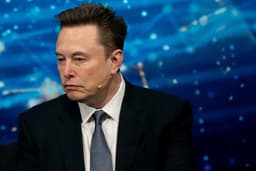
The astronomical compensation packages awarded to key executives, such as Elon Musk's potential $1 trillion Tesla deal, underscore the critical dependence companies have on top talent. Firms openly acknowledge their reliance on these 'superstars,' with potential departures threatening significant operational and financial setbacks. This dependency extends beyond tech giants to various knowledge-intensive industries where a select few individuals are responsible for a disproportionate share of profits.
The cost of losing these critical workers can be immense, leading to decreased profitability, reduced investments, and a slump in stock prices. Studies indicate that the sudden absence of a chief executive can negatively impact a firm's financial performance. Furthermore, the departure of superstar researchers can lead to a long-term decline in their collaborators' productivity, costing billions in industries reliant on innovation.
When these high-value employees leave, they can also pose a competitive threat, especially in fields like AI, where rival labs are formed by former key personnel. This phenomenon can trigger an exodus of talent, sometimes leading to the collapse of firms as partners depart en masse. To mitigate these risks, companies resort to bidding up salaries, as non-compete agreements are increasingly restricted in many jurisdictions, making talent retention an ever-escalating challenge.