

Home / Business and Economy / Energy Crisis Fuels Solar Boom in South Korea
Energy Crisis Fuels Solar Boom in South Korea
16 Apr
Summary
- Solar income funds communal meals and village services.
- South Korea aims for 2,500 solar income villages by 2030.
- Grid capacity limits and Chinese supply chains challenge solar growth.
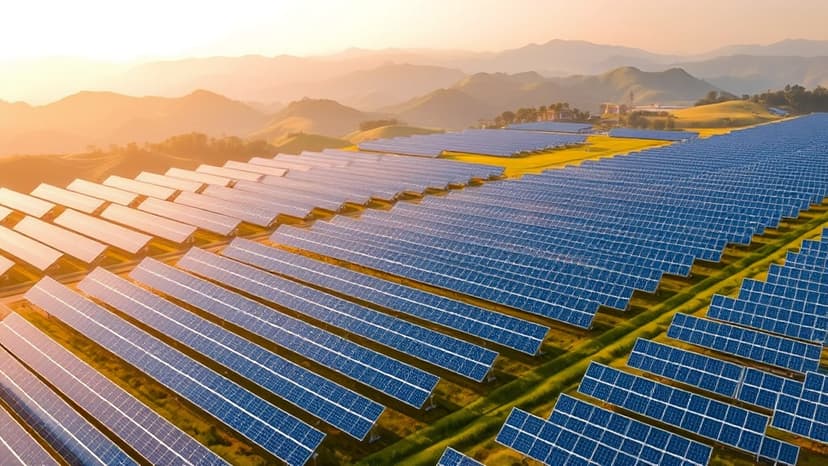
The ongoing energy crisis has injected political urgency and increased funding into South Korea's solar industry transformation. Guyang-ri, a village of 70 households, exemplifies this shift, generating substantial monthly profit from its one-megawatt solar installation. This revenue now funds communal lunches, transportation for the elderly, and cultural activities, fostering stronger community bonds.
The "solar income village" program, with Guyang-ri as a national prototype, aims to expand to 2,500 villages by 2030, with a significant acceleration in new village creation this year. President Lee Jae Myung is leveraging the Middle East crisis to expedite clean energy transition, emphasizing that fossil fuel dependency poses a national vulnerability.

