

Home / Business and Economy / India's Mango Export Puzzle: Best Fruit Goes Where?
India's Mango Export Puzzle: Best Fruit Goes Where?
10 Apr
Summary
- India is the world's largest mango producer, yet exports less than 1%.
- Exported mangoes meet strict global standards for quality and safety.
- Domestic markets often face issues like early harvesting and chemical ripening.
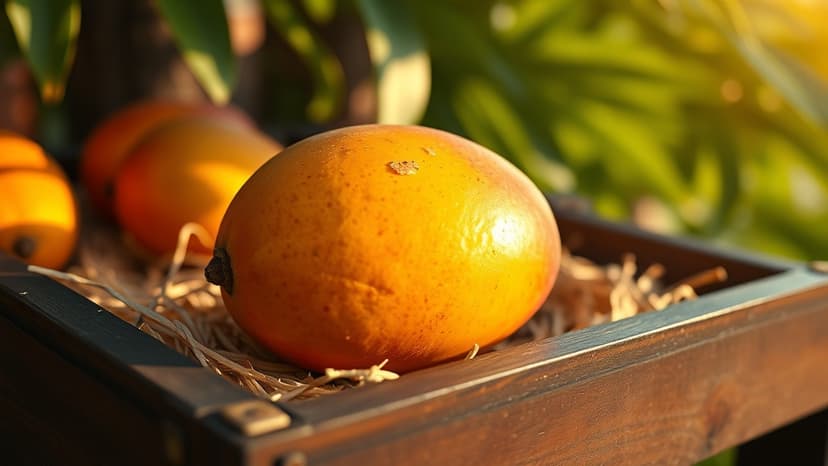
India, the dominant force in global mango production, exports a mere fraction of its output, contributing over 40% to the world's supply while shipping less than 1% internationally. A common perception suggests that superior quality mangoes are reserved for export markets, a notion with a kernel of truth but an incomplete picture.
Exporting mangoes necessitates adherence to stringent international standards concerning appearance, size, pesticide residue, and post-harvest treatment. This often involves investments in cold chains and specialized treatments, compelling farmers to maintain higher quality control and reduced pesticide use to meet these demanding norms.
Conversely, domestic supply chains often exhibit poorer compliance, leading to practices such as early harvesting and the use of chemical agents like carbide for ripening. These practices, while facilitating quicker sales and mitigating risks from climate uncertainty and spoilage, can compromise the fruit's natural quality and safety.
The disparity in quality stems from differing incentives and supply chain standards. While stricter domestic regulations could improve quality, they entail increased costs and complexity, potentially disadvantaging smaller farmers. Addressing this requires aligning incentives by investing in infrastructure and ensuring better domestic pricing for higher-quality fruit.
