

Home / Business and Economy / India's Flag: Maritime Shield in Hormuz Tensions
India's Flag: Maritime Shield in Hormuz Tensions
19 Apr
Summary
- Flagging a vessel means registration with a country and adherence to its maritime laws.
- Indian-flagged ships receive strategic backing and naval protection from India.
- India aims to increase its global flagged fleet share to 30-40% by 2047.
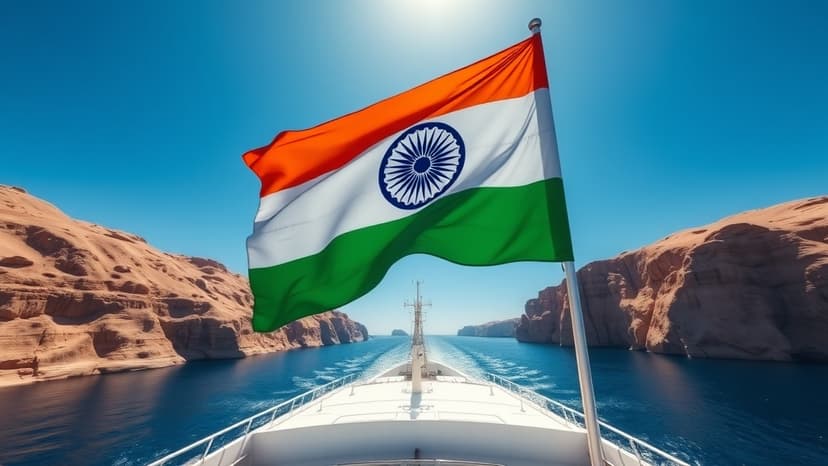
The flag flown by a commercial vessel is increasingly vital for maritime security and regulatory compliance, especially amidst heightened Middle East tensions and concerns over the Strait of Hormuz. Registration with a nation, such as India, subjects a ship to specific maritime laws and grants the flag state authority over investigations and penalties.
Indian-flagged vessels are registered with India's Directorate General of Shipping and operate under its jurisdiction, governed by the Merchant Shipping Act. These ships are subject to Indian taxation and must meet national safety, labor, and environmental standards, requiring company incorporation in India and vessel registration in domestic waters.
Beyond regulatory obligations, Indian-flagged ships receive strategic advantages, including naval and diplomatic protection. While this may impose a greater compliance burden than 'Flag of Convenience' registries, it ensures state backing. India's fleet has been expanding, reaching 14.2 million Gross Tonnage in March, with ambitious goals to capture 30-40% of the global flagged fleet by 2047.
During recent Iran-related crises, over two dozen Indian ships were stranded but received Indian Navy escorts. Despite these incidents, no direct attacks on Indian-flagged vessels have been reported, attributed partly to India's diplomatic stance. The government's role, however, is confined to enforcing laws and international norms, not dictating commercial operations.
