Home / Business and Economy / India's Electric Scooters Go Mass Market
India's Electric Scooters Go Mass Market
7 Jun
Summary
- Electric scooter sales expand beyond big cities.
- Established two-wheeler makers are gaining market share.
- Consumer demand rises due to fuel prices and EV acceptance.
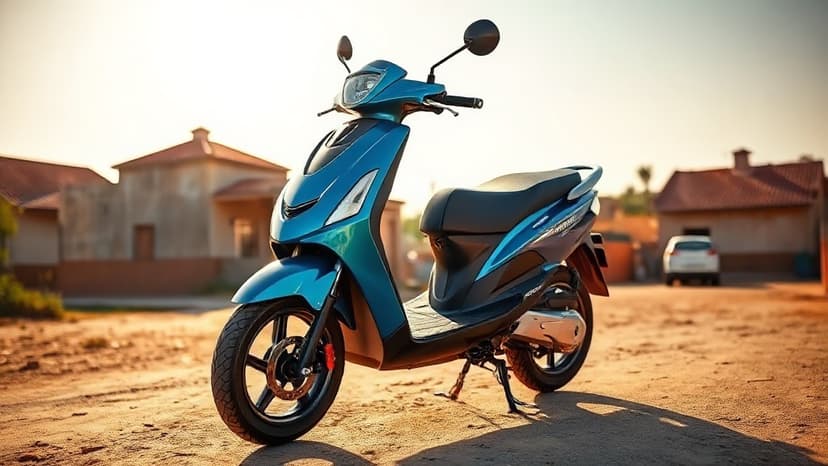
Electric scooter sales in India are no longer confined to metropolitan hubs, with adoption now rapidly spreading through smaller cities and rural regions. This transition marks electric mobility's entry into its mass-market phase.
Initially, technology and product innovation propelled new EV leaders in urban centers. However, as e-scooters penetrate deeper into India's diverse markets, factors like extensive distribution networks, robust service infrastructure, accessible financing, and strong brand trust are becoming paramount. These are traditionally the strengths of established Indian two-wheeler manufacturers.
Industry leaders observe a notable increase in demand over recent quarters, especially in tier-2, tier-3, and tier-4 cities. This growth is fueled by escalating fuel prices and growing consumer confidence in EVs as a practical and economical choice for everyday commuting.
The evolving consumer behavior indicates that e-scooters are moving beyond early adopters to be considered viable alternatives to conventional vehicles. This trend is particularly strong in regions historically dominated by traditional scooter sales, suggesting electric mobility is integrating into the mainstream two-wheeler market.
Consequently, the competitive landscape is shifting. Established players like TVS Motor, Bajaj Auto, and Hero Motocorp are strengthening their positions, while some early EV pioneers see their dominance moderate. The market is increasingly shaped by mainstream consumer preferences rather than solely by technology enthusiasts, with family-oriented products also gaining traction.


