Home / Business and Economy / India's Economy Booms, Stocks Lag: What's the Disconnect?
India's Economy Booms, Stocks Lag: What's the Disconnect?
3 Sep
Summary
- India's economy grew 7.8% in the June quarter, surpassing expectations.
- Key stock benchmarks underperform despite strong economic growth.
- Economic activity shifts from large banks/IT to NBFCs/manufacturing.
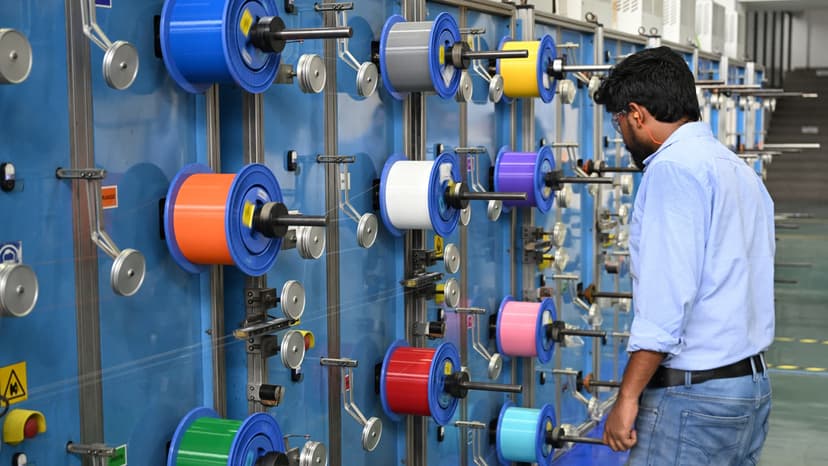
India's economy surprised observers by expanding 7.8% in the June quarter, significantly exceeding forecasts and defying a challenging global trade environment. This economic outperformance, however, stands in stark contrast to the sluggish performance of the nation's key stock benchmarks. Major indexes like the Nifty 50 have struggled, registering among the worst global returns since the start of 2026.
Market experts attribute this disconnect to a fundamental shift in India's economic landscape. Growth is increasingly being fueled by emerging sectors such as manufacturing, consumer tech, and fintech, rather than the traditional large-cap banking and IT companies that heavily influence the Nifty 50. These dominant sectors, making up a substantial portion of the index, have faced pressures, with IT firms experiencing margin declines and large banks adopting more conservative lending practices.
Consequently, the true picture of India's economic acceleration is better represented in the mid-cap and small-cap stock indexes. Companies in these segments show significantly higher earnings growth and are actively investing in new capacity. For instance, electronic manufacturers like Dixon Technologies and Amber Enterprises, experiencing substantial stock gains, are not included in the benchmark indexes. This divergence highlights how a large part of India's economic vitality originates from sectors and businesses with limited representation in the primary equity indices, signaling a structural change in wealth creation.


