feedzop-word-mark-logo
searchLogin
Feedzop
homeFor YouUnited StatesUnited States
You
bookmarksYour BookmarkshashtagYour Topics
Trending
trending

NFL playoff picture Week 15

trending

Rams extend Puka Nacua contract

trending

NHL threatens 2026 Olympics

trending

Nick Reiner killed his parents

trending

Snow causes school delays

trending

Pistons beat Atlanta Hawks

trending

Steelers sign Valdes-Scantling

trending

Lainey Wilson joins ManningCast

trending

The Voice season finale

Terms of UsePrivacy PolicyAboutJobsPartner With Us

© 2025 Advergame Technologies Pvt. Ltd. ("ATPL"). Gamezop ® & Quizzop ® are registered trademarks of ATPL.

Gamezop is a plug-and-play gaming platform that any app or website can integrate to bring casual gaming for its users. Gamezop also operates Quizzop, a quizzing platform, that digital products can add as a trivia section.

Over 5,000 products from more than 70 countries have integrated Gamezop and Quizzop. These include Amazon, Samsung Internet, Snap, Tata Play, AccuWeather, Paytm, Gulf News, and Branch.

Games and trivia increase user engagement significantly within all kinds of apps and websites, besides opening a new stream of advertising revenue. Gamezop and Quizzop take 30 minutes to integrate and can be used for free: both by the products integrating them and end users

Increase ad revenue and engagement on your app / website with games, quizzes, astrology, and cricket content. Visit: business.gamezop.com

Property Code: 5571

Home / Business and Economy / India's Waste to Wealth: Crop Residue Fuels Green Industry

India's Waste to Wealth: Crop Residue Fuels Green Industry

15 Dec

•

Summary

  • India produces over 500 million tonnes of agricultural residue annually.
  • Residue-based fibers offer a 70% lower carbon footprint than wood.
  • Market coordination, not resource scarcity, limits residue utilization.
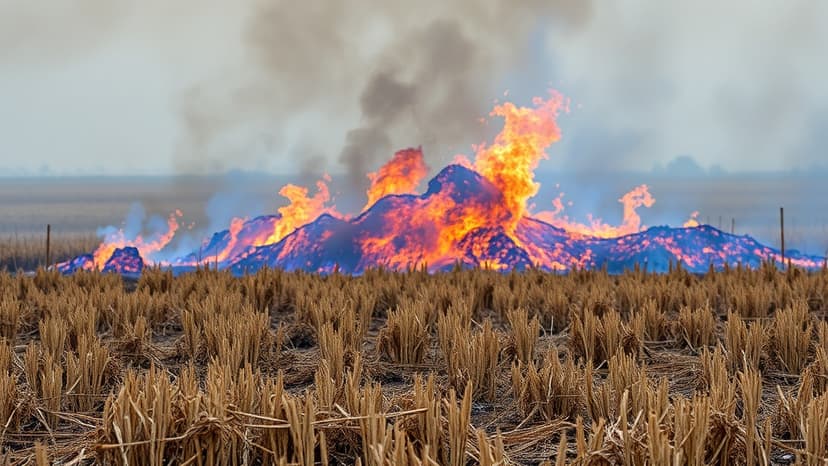
India's Waste to Wealth: Crop Residue Fuels Green Industry

India possesses a significant opportunity to transform its agricultural residue, estimated at over 500 million tonnes annually, into a valuable industrial feedstock. Instead of being discarded or burned, this biomass can be converted into pulp, paper, textiles, and advanced bio-materials. Utilizing crop residues offers a strategic advantage, providing materials with a lower carbon footprint compared to traditional wood-based sources.

This shift is driven by global demand for sustainable and resilient supply chains, with major brands already committing to forest-safe fibers. The core challenge in India is not the availability of raw material but the market design needed to aggregate and process this biomass efficiently. Overcoming fragmented aggregation, high transportation costs, and limited processing capacity is crucial.

The path forward involves structural alignment, including long-term offtake agreements between farmers and manufacturers, pre-processing hubs, and green financing. This valorization of agricultural residue promises economic benefits, rural job creation, industrial supply security, and climate impact, positioning India to lead in the next generation of materials.


Disclaimer: This story has been auto-aggregated and auto-summarised by a computer program. This story has not been edited or created by the Feedzop team.
India produces over 500 million tonnes of agricultural residue each year.
Crop residues can be converted into pulp, paper, packaging, textiles, and advanced bio-materials.
The primary barrier is market coordination, including aggregation, transportation, and processing capacity, rather than a lack of raw material.

Read more news on

Indiaside-arrowBusiness and Economyside-arrow

You may also like

Plastic Waste Crisis: Women Entrepreneurs Lead the Charge

12 Dec • 13 reads

article image

India's Agrochem Exports Soar to $3.3B

11 Dec • 25 reads

article image

India Seeks Tariff Relief in U.S. Trade Negotiations

10 Dec • 31 reads

article image

Restaurant Oil Transformed into Plastic and Superglue

9 Dec • 32 reads

article image

Eco-Packaging Evolves: Smart & Sustainable in 2025

10 Dec • 19 reads

article image